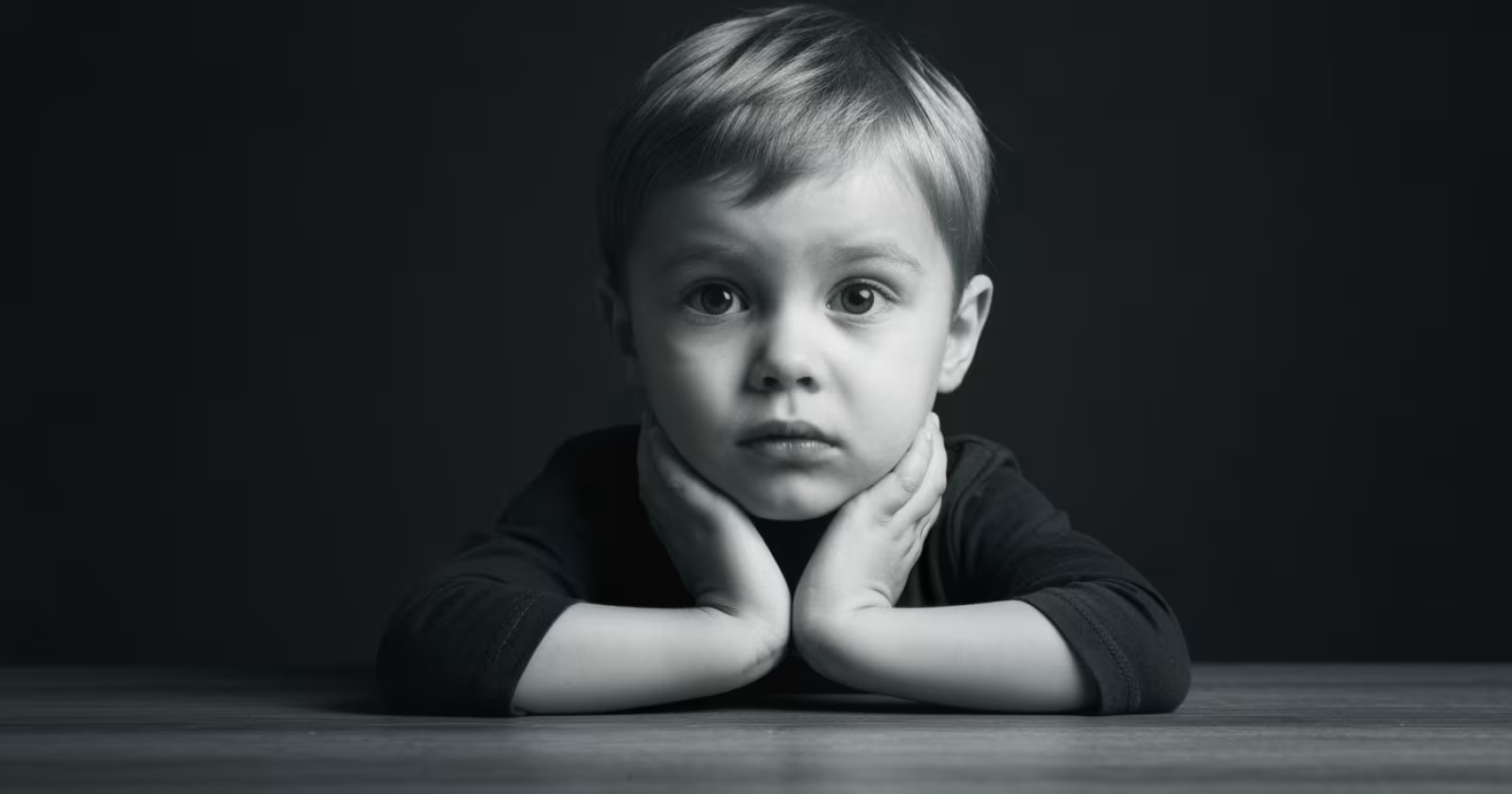
She slammed her plate on the table. Not gently — with force. Her mother’s first instinct was to say, “Stop that right now.” But something about the look in her daughter’s eyes made her pause. It wasn’t defiance. It was something else entirely.
That “something else” is what this article is about. Because so many behaviors we label as rude, disobedient, or dramatic in children are actually stress wearing a disguise. And when we punish the disguise, we miss the child underneath it.
I’ve seen this pattern again and again — in homes, in classrooms, in my own parenting moments. A child acts out, and we react to the action. But the real story is happening inside their body, in a nervous system that is screaming for help in the only language it knows.
What Stress Actually Looks Like in a Child’s Body
Adults express stress in recognizable ways. We say, “I’m overwhelmed.” We cancel plans. We get headaches. Children don’t have that vocabulary yet. Their stress comes out sideways — through behavior that looks like a problem, not a plea.
A child who suddenly starts arguing about everything at bedtime might not be testing limits. They might be replaying something from school that scared them. A child who refuses to eat dinner might not be picky — their stomach might be tight with worry they can’t name.
Think about a seven-year-old who starts hitting his younger sibling every evening. His parents tried time-outs. They tried taking away screen time. Nothing changed. It wasn’t until they noticed he only did it after a particular afterschool activity that they realized he was overwhelmed and had no way to release that tension — except through his fists.
When a child’s behavior suddenly changes or intensifies, the first question to ask is not “How do I stop this?” but “What is this child feeling that they cannot say?”
This shift — from reacting to the behavior to reading the emotion behind it — changes everything. It doesn’t mean you allow the behavior. It means you stop treating the symptom and start addressing the cause.
Why Stress Disguises Itself as Misbehavior
Children’s brains are still under construction. The prefrontal cortex — the part responsible for logical thinking, impulse control, and emotional regulation — doesn’t fully mature until the mid-twenties. So when a child is flooded with stress hormones like cortisol and adrenaline, their brain shifts into survival mode.
This is the fight-or-flight response. In children, “fight” can look like aggression, defiance, or constant arguing. “Flight” can look like avoidance, hiding, or refusing to go to school. And there’s a third response many parents don’t know about — “freeze,” which looks like laziness, zoning out, or not listening.
None of these are choices the child is making deliberately. Their nervous system is making the choice for them. Here are some common stress signs that parents often misread:
- Sudden clinginess or baby talk — This is regression, and it signals that the child is seeking safety by returning to a stage where they felt more protected.
- Explosive reactions to small things — A meltdown over a broken crayon is rarely about the crayon. It’s the last drop in an already full emotional cup.
- Lying or sneaking — A stressed child may lie not to deceive, but to avoid conflict that their nervous system cannot handle right now.
- Refusing to do things they used to enjoy — Withdrawal from activities or friends often signals emotional overload, not laziness.
- Physical complaints with no medical cause — Stomachaches, headaches, and fatigue are the body’s way of expressing what the mind cannot.
When we understand that a child’s difficult behavior is often a stress response, we stop taking it personally. And that alone is a powerful shift.
| Behavior You See | What It Looks Like | What It Might Actually Mean |
|---|---|---|
| Defiance | Saying “No” to everything, arguing | Fight response — feeling threatened or overwhelmed |
| Withdrawal | Hiding, going silent, avoiding eye contact | Freeze response — emotional shutdown |
| Clinginess | Refusing to separate, following parent everywhere | Seeking safety — anxiety or insecurity |
| Aggression | Hitting, pushing, throwing things | Nervous system overload with no outlet |
| Regression | Bedwetting, baby talk, thumb-sucking | Need for comfort and emotional security |
| Constant silliness | Acting goofy, not taking anything seriously | Masking anxiety with humor to cope |
What You Can Do When You See These Signs
The goal here isn’t to become a perfect parent who never reacts. That’s not realistic and not the point. The goal is to build a small pause between your child’s behavior and your response — just enough space to wonder, “Could this be stress?”
Name the feeling before correcting the behavior. Try saying, “It looks like something is really bothering you right now,” before addressing what they did. This tells the child that you see them — not just their actions. When children feel seen, their nervous system begins to calm down.
Look for patterns, not just incidents. Keep a mental note of when the behavior happens. Is it always after school? Before a particular class? On days they visit a certain relative? Stress behaviors tend to cluster around triggers. Finding the trigger is more useful than managing each incident separately.
Reduce the demand, not your expectations. If your child is clearly overwhelmed, temporarily lowering the pressure is not “giving in.” It’s giving their nervous system room to recover. You can revisit expectations once they’re regulated. A child who is drowning cannot learn to swim at the same time.
Create a “release valve” in their day. Stress needs somewhere to go. For some children, this is physical — running, jumping, squeezing a pillow. For others, it’s creative — drawing, building, playing with water. And for many, the most powerful release is simply being heard. Ten minutes of undivided listening, without advice or correction, can do more than an hour of structured activity.
Watch your own stress signals. Children absorb the emotional climate of their home like sponges. If you’ve been carrying tension — from work, relationships, finances — your child may be responding to your stress, not just their own. This isn’t blame. It’s just how connection works. When you regulate yourself, you give your child’s nervous system permission to settle too.
Know when to seek support. If the behaviors are intense, persistent, or getting worse over weeks, it’s worth talking to a child psychologist or counselor. Not because something is “wrong” with your child, but because some stress runs deeper than what home strategies alone can reach. Asking for help is one of the bravest things a parent can do.
The Behavior Is Not the Whole Story
I think one of the hardest parts of parenting is resisting the urge to fix the surface. When a child is rude, we want to fix the rudeness. When they refuse, we want compliance. When they cry over nothing, we want them to toughen up. But every one of those moments is a door. Behind it is a child trying to manage something they don’t yet have the tools for.
You won’t get it right every time. Some days you’ll react before you pause. Some days the stress will be yours, and you’ll project it onto your child without realizing it. That’s not failure. That’s being human in a role that asks more of you than almost anything else.
The fact that you’re reading this — that you’re willing to look beneath the behavior — already tells me something about the kind of parent you are. Not a perfect one. But a present one. And for a stressed child, presence is the thing that heals.