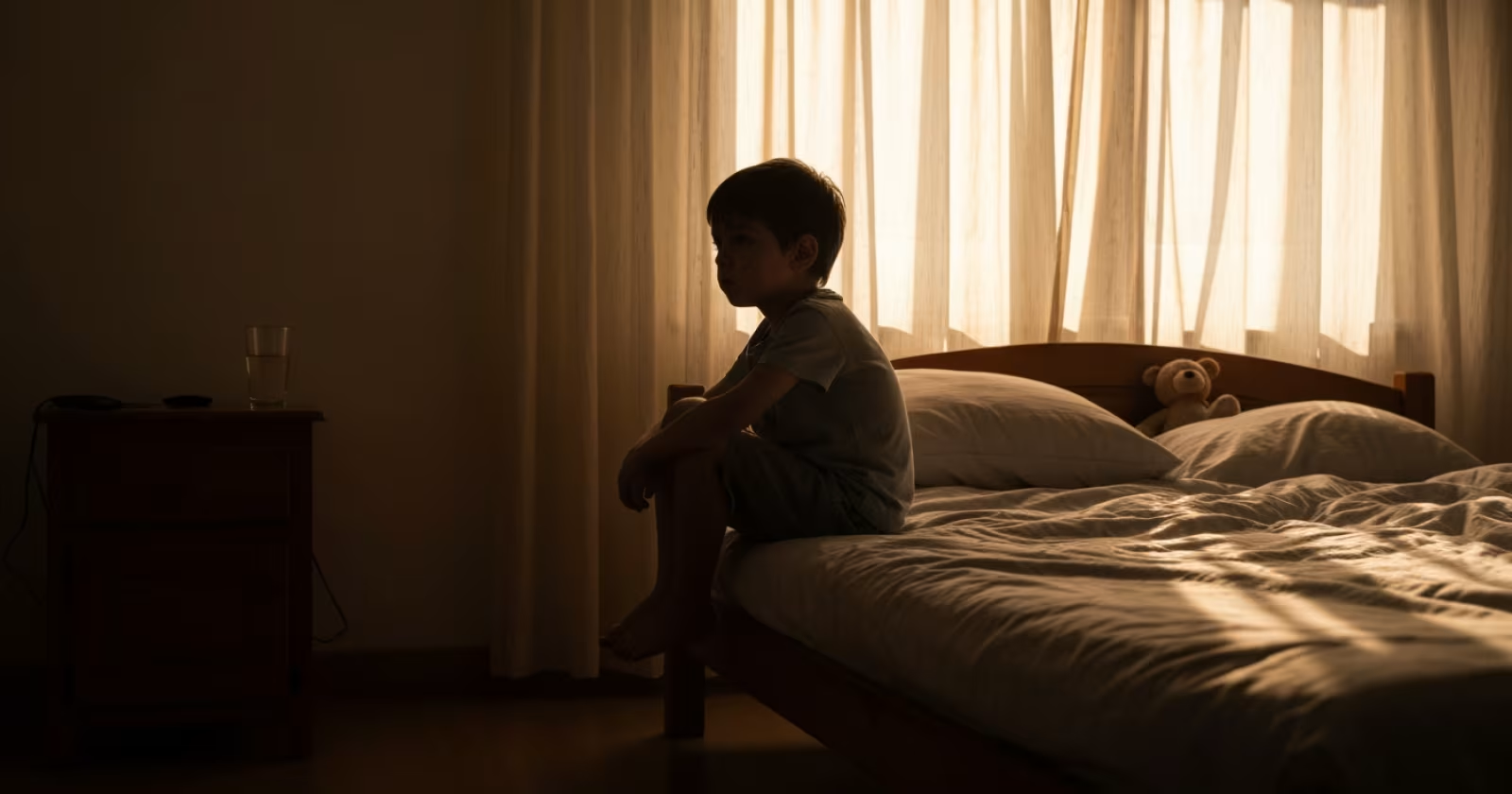
She’s the “good kid.” The one who never causes trouble at school. The one whose teacher says, “I wish I had thirty of her.” She finishes her homework without being asked, keeps her room tidy, and rarely talks back.
But at night, she can’t sleep. She asks the same question four times — “Will you be here when I wake up?” Her stomach hurts every Sunday evening. And nobody connects the dots because she looks so perfectly fine on the outside.
This is what anxiety looks like in so many children. Not dramatic. Not obvious. Quietly eating away at their peace while the adults around them see only a well-behaved child.
The Child Who Seems “Fine” Is Sometimes the One Struggling Most
I’ve spoken to hundreds of parents over the years, and the most common thing I hear when childhood anxiety finally gets recognized is this: “But there were no signs.” There were signs. They just didn’t look the way we expected them to.
We tend to picture an anxious child as someone who cries a lot or clings to a parent’s leg. And yes, sometimes anxiety looks like that. But more often, it disguises itself as something else entirely — anger, perfectionism, constant belly aches, or even being the class clown.
Think about a child who throws a tantrum every time plans change. Or one who erases and rewrites the same sentence five times because it isn’t “perfect.” Or the child who suddenly refuses to go to a birthday party they were excited about yesterday.
Anxiety in children rarely announces itself. It whispers through behaviors that parents are taught to either ignore or punish.
That’s the heartbreaking part. The very signals a child sends out are often misread. The angry outburst isn’t defiance — it’s a nervous system that’s overwhelmed. The “laziness” about school isn’t a lack of motivation — it’s a fear of getting things wrong.
Why Anxiety Wears So Many Masks in Childhood
Children don’t have the vocabulary to say, “I’m feeling anxious.” Most adults struggle with that sentence — imagine being seven years old and trying to explain a tightness in your chest that has no visible cause.
So the body speaks instead. A child’s brain, when it senses threat — real or imagined — activates the fight-or-flight response. This is the same system that would help them run from danger. But when the “danger” is a math test or a new classroom, the response shows up in confusing ways.
Fight looks like anger, defiance, or arguing over small things. Flight looks like avoidance, withdrawal, or refusing to participate. Freeze looks like silence, zoning out, or seeming “spaced out” in class.
- Frequent physical complaints — headaches, stomach aches, nausea — especially before school or social events, with no medical explanation
- Extreme need for reassurance — asking the same worried question repeatedly, needing constant confirmation that things are okay
- Perfectionism or meltdowns over mistakes — erasing work, refusing to try new things, getting upset over small errors
- Sleep difficulties — trouble falling asleep, nightmares, wanting to sleep in the parent’s bed again after outgrowing it
- Sudden avoidance — backing out of activities they used to enjoy, not wanting to go to school, avoiding friends
What makes this harder is that anxious children are often praised for their “mature” behavior. They’re watchful, careful, responsible. Adults see a child who follows rules. The child feels like they have no choice but to follow rules — because the alternative feels terrifying.
| What Parents See | What the Child May Actually Feel |
|---|---|
| Well-behaved and quiet | Afraid of doing something wrong |
| Angry outbursts over small things | Overwhelmed by worry they can’t express |
| Clingy or needy | Terrified of separation or loss |
| Refusing to go to school | Panicking about something at school |
| Perfectionist about homework | Believing mistakes make them a failure |
| Frequent stomach aches | Anxiety showing up in the body |
| Avoiding birthday parties | Social situations feel unsafe or unpredictable |
What You Can Do When You Suspect Your Child Carries Hidden Worry
The first and most powerful thing is this: believe the behavior. If your child’s body is speaking — through pain, through anger, through avoidance — don’t dismiss it. You don’t need a diagnosis to start responding with compassion.
Name the feeling before you correct the behavior. Instead of “Stop overreacting,” try, “Something about this feels really scary for you, doesn’t it?” You’re not agreeing that the fear is logical. You’re telling your child that their inner world matters to you. That alone can lower their anxiety in the moment.
Create a “worry time” ritual. Give your child ten minutes before bed to tell you everything they’re worried about. Listen without fixing. Write the worries down on paper together and put them in a box. This sounds simple, but it teaches the brain that worries can be contained — they don’t have to float around all day.
Stop reassuring on repeat and start validating instead. When a child asks, “Will something bad happen?” for the tenth time, more reassurance doesn’t help. It actually feeds the anxiety loop. Instead, try: “You’re having that worry again. What does your worry feel like in your body right now?” This shifts them from the thought to the sensation — and that’s where regulation begins.
Watch for avoidance patterns and gently challenge them. Anxiety shrinks a child’s world by making them avoid things. If your child stopped going to the park, don’t force them — but don’t let the avoidance settle in permanently either. Take small steps. Walk to the park together without the pressure of staying. Let them lead the pace.
Check your own anxiety response. Children are emotional sponges. If you respond to their worry with your own panic — rushing to fix, getting visibly stressed, over-accommodating — their brain learns: “This really is dangerous.” Your calm is their anchor. You don’t have to fake it. Just slow down your breathing. Speak a little softer. That’s enough.
If the anxiety is affecting their daily life — school attendance, friendships, sleep, eating — please reach out to a child psychologist or counselor. Seeking help isn’t a sign that you’ve failed. It’s a sign that you’re paying attention.
There’s no perfect way to handle this. Some days you’ll say the wrong thing. Some days you’ll lose patience with the fifteenth “what if” question. That’s not failure — that’s being human in a hard moment.
What your child needs most isn’t a parent who gets it right every time. They need a parent who keeps showing up, keeps noticing, and keeps saying — without words or with them — “I see you. And you’re safe with me.”
Sometimes the bravest thing a child does all day is something nobody sees. Your job isn’t to fix the fear. It’s to make sure they don’t carry it alone.