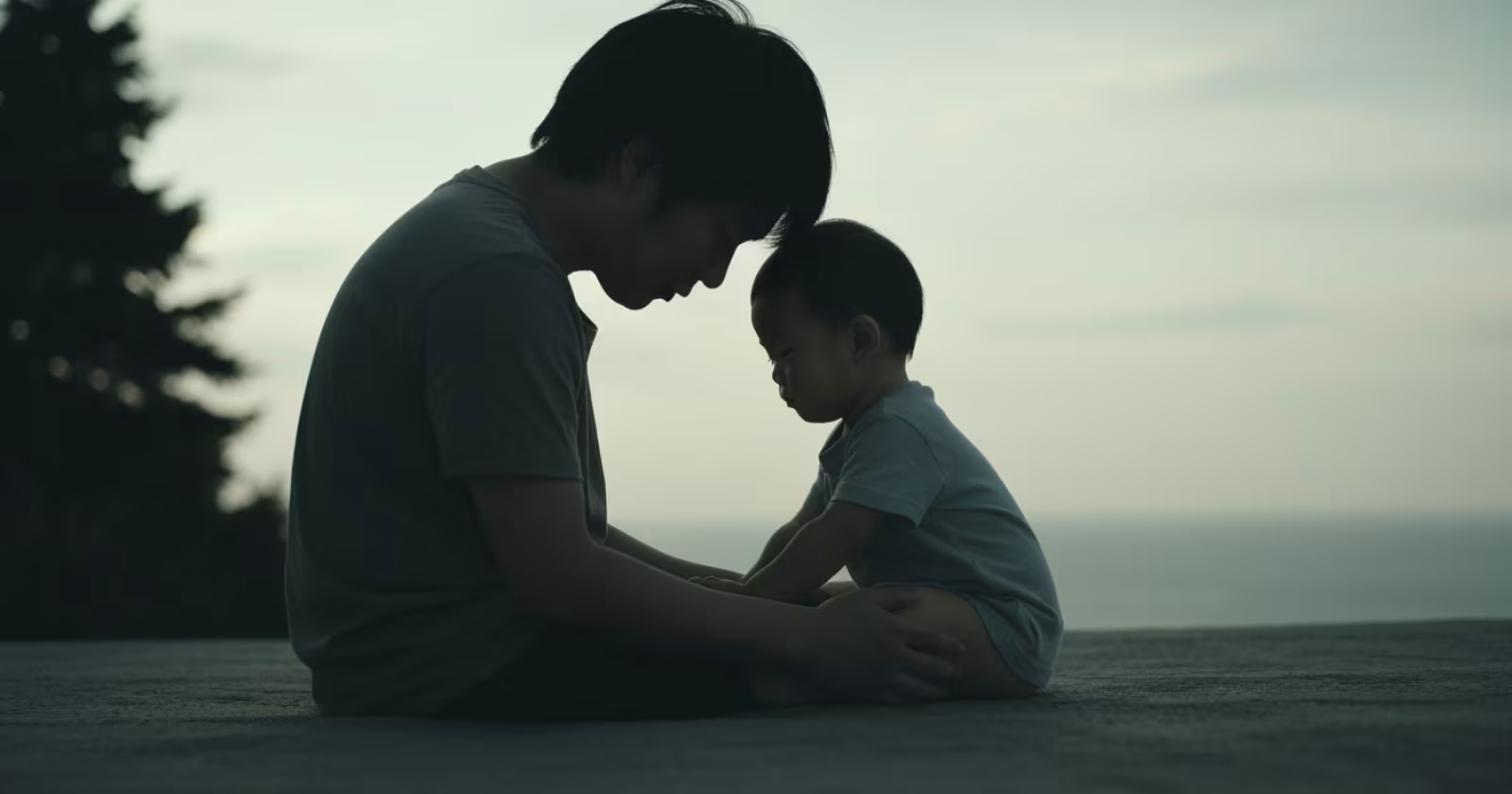
A four-year-old trips on the playground and scrapes her knee. She doesn’t cry right away. Instead, she looks around — scanning — until her eyes land on her father sitting on the bench. Only then do the tears come. She runs toward him, arms open, face crumbling.
That pause before the tears? That split-second scan? It tells us everything about safety. The child didn’t just need someone to fix the wound. She needed to know that the person who would receive her pain was actually there — emotionally, not just physically.
And that moment, the one where she decided it was okay to fall apart, is the exact moment we are going to talk about. Because it holds a truth most of us have never put into words.
Safety Isn’t a Place — It’s a Feeling in Someone’s Presence
We often think of safety in physical terms. A locked door. A car seat. A childproof cabinet. But for a child, the deepest kind of safety has nothing to do with walls or locks. It is the feeling that says: I can show you my worst moment, and you will not turn away.
Psychologists call this “felt safety.” It’s different from being safe. A child can be perfectly safe in a room and still not feel safe. Felt safety happens inside the child’s nervous system. It is triggered not by circumstances, but by the quality of the person sitting next to them.
Think about a child who spills milk at the dinner table. In one home, they immediately look at the parent’s face — checking for anger. In another home, they simply say, “Oops,” and reach for a napkin. The milk is the same. The mess is the same. What’s different is whether the child’s body has learned to expect warmth or danger in that moment.
A child doesn’t feel safe because you told them they are safe. They feel safe because your face, your voice, and your body have proven it — hundreds of times, in small moments they will never consciously remember.
That is the real work of parenting. Not the big speeches. Not the birthday parties. The tiny, unremarkable moments where your child’s nervous system quietly learns: this person is my safe place.
What Happens Inside a Child’s Brain in That Moment
When a child feels threatened — by a loud noise, a scraped knee, a fight with a sibling, or even just a confusing emotion — their brain activates what we call the stress response. You may know it as “fight or flight.” The child’s heart rate goes up. Their muscles tense. Their thinking brain goes partially offline.
Now here is where it gets powerful. A child’s brain cannot calm this response on its own. Not fully. Not in the early years. They need an adult’s regulated nervous system to help bring them back down. This process is called co-regulation, and it is one of the most important things that happens between a parent and child.
When a child runs to you in distress and you respond with a calm voice, a steady presence, and unhurried attention — their brain receives a signal. Not through your words, but through your tone, your breathing, your body language. That signal says: the danger is over. You can come back to yourself now.
Over time, this pattern builds what attachment researchers call a “secure base.” The child learns three things that shape their entire emotional architecture:
- My feelings are real and they matter to someone.
- When I am overwhelmed, there is someone who can help me find my way back.
- I do not have to manage the hardest parts of life alone.
These three beliefs, formed before a child can even spell the word “safety,” become the foundation of their self-worth, their ability to handle stress, and their capacity to trust other people for the rest of their lives.
Signs That Tell You a Child Feels Safe With You
Children rarely say, “I feel emotionally safe with you.” They show it. And once you know what to look for, you will start noticing these signals everywhere.
- They cry in front of you freely — not as manipulation, but as trust. A child who holds back tears around you may be managing your emotions instead of expressing their own.
- They tell you about their mistakes — the broken toy, the lie they told at school, the friend they hurt. This means they trust your response more than they fear it.
- They relax physically around you — their shoulders drop, their breathing slows, they lean into you without being asked.
- They bring you their “ugly” emotions — rage, jealousy, shame. These are the hardest feelings to share. A child only shares them with someone who has proven they can handle it.
- They seek you out after conflict — even after a fight or a scolding, they come back. They want to reconnect. This is one of the strongest signs of secure attachment.
| What the Child Does | What It Actually Means |
|---|---|
| Cries openly when upset | They trust you to hold their pain without punishing it |
| Confesses a mistake voluntarily | Your response matters more to them than avoiding punishment |
| Falls asleep easily near you | Their nervous system fully relaxes in your presence |
| Shows anger directly at you | They believe the relationship can survive difficult emotions |
| Comes back after being disciplined | They know correction doesn’t mean rejection |
How to Become the Person Your Child Feels Safest With
You don’t need to be perfect. You don’t even need to be calm all the time. What your child needs is a pattern — a general, reliable tendency — that tells their nervous system you are trustworthy. Here is how to build that pattern, one small moment at a time.
Let your face be the first thing that softens. When your child walks into the room, let your eyes light up before you say a word. Children read faces before they process language. A soft face says “you belong here” faster than any sentence can.
When they are upset, name the emotion before you fix the problem. Instead of “stop crying, it’s fine,” try “that really scared you, didn’t it?” Naming the feeling tells the child: I see what’s happening inside you. That alone reduces the intensity of the emotion.
Repair after you lose your temper. You will yell sometimes. You will react badly. What matters is what happens next. Go back to your child. Say, “I was too harsh. That wasn’t about you. I’m sorry.” Repair doesn’t undo the rupture — it does something better. It teaches the child that relationships can break and heal.
Don’t rush their distress. When a child is crying or melting down, the most powerful thing you can do is simply stay. Don’t distract. Don’t lecture. Don’t count to three. Just be the steady presence in the room while their storm passes. Your calm body teaches their body how to calm down.
Make ordinary moments feel unhurried. You don’t need a special activity. Sit with them while they draw. Listen to their rambling story about a bug they saw. Let bedtime take five extra minutes. Safety is built in the ordinary, not the extraordinary.
None of these require you to be endlessly patient or emotionally flawless. They only require you to keep showing up — imperfectly, honestly, and with a willingness to try again tomorrow.
Parenting is not a performance. There is no audience scoring your responses. There is just a small person who is constantly, quietly asking one question with their entire being: Can I be myself with you?
Every time your answer is yes — with your face, your voice, your unhurried presence — you are giving your child something no toy, no school, and no achievement can replace. You are giving them the memory of a person who made the world feel survivable.
And that memory doesn’t fade. It becomes the voice inside their head for the rest of their life.