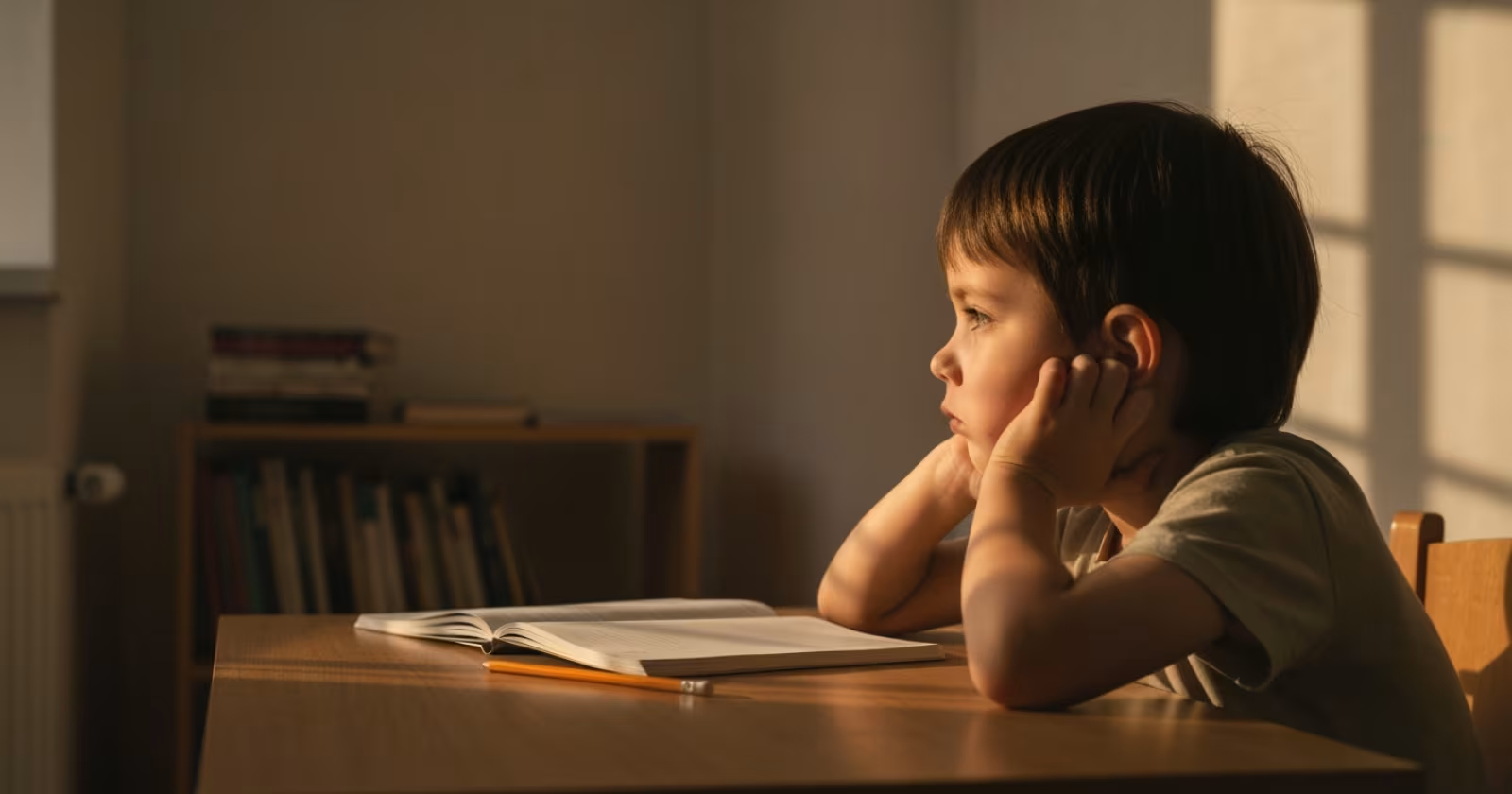
She used to run to the bookshelf every evening. She would flip through picture books, ask a hundred questions about dinosaurs, and beg you to count stars together before bed. Now she sits at her desk, chin resting on her palm, staring at the textbook like it personally offended her.
Something shifted. And you can feel it — that bright spark of curiosity dimming, slowly, quietly. It keeps you up at night wondering: did I do something wrong?
You didn’t. But something is happening inside your child’s mind that deserves your attention. And once you understand it, you can gently bring that spark back.
The Spark Was Never About Studying — It Was About Curiosity
Here’s something most of us forget. Children are born learners. Not born students — born learners. There’s a big difference. A learner wants to touch, taste, ask, explore, and figure things out. A student is expected to sit still, memorize, and perform. When we confuse learning with schooling, we accidentally squeeze the joy out of the process.
Think about a child who loves building things with blocks. She’s learning physics, spatial reasoning, and problem-solving — all without a single worksheet. But the moment you turn that same activity into a “lesson” with rules and scores, something changes. The fun drains out. The pressure seeps in.
This doesn’t mean school is bad. It means that when a child starts losing interest, the problem is rarely the child. It’s usually the experience of learning that has become heavy, joyless, or disconnected from what the child actually cares about.
A child doesn’t lose interest in learning — they lose interest in being forced to learn things that feel meaningless to them.
That one shift in perspective changes everything. When we stop asking “why won’t my child study?” and start asking “what is making learning feel bad for my child?” — we open a door that was previously locked.
What’s Really Going On Inside Your Child’s Mind
Child psychologists talk about something called intrinsic motivation — the inner drive to do something because it feels satisfying, not because someone is offering a reward or threatening a punishment. Young children are full of intrinsic motivation. But over time, several things can quietly crush it.
- Too much pressure on results: When grades matter more than understanding, children start associating learning with anxiety instead of joy.
- Loss of autonomy: When every hour is scheduled — tuition, homework, extra classes — children feel they have no control over their own time or interests.
- Constant comparison: Being compared to siblings, cousins, or classmates makes a child feel that their worth depends on performance, not effort.
- Fear of failure: If mistakes are met with frustration or disappointment, children learn to avoid trying rather than risk getting it wrong.
- Disconnection from curiosity: When the curriculum feels irrelevant to their world, children mentally check out — even if they’re physically sitting at the desk.
Between ages 7 and 12, children are developing what psychologists call their “academic self-concept” — basically, a story they tell themselves about whether they’re smart, capable, and good at learning. If that story becomes negative during these years, it can shape their relationship with education for a long time.
This is also the age when children begin to need more autonomy. They want choices. They want to feel like learning is something they do, not something that is done to them. When that need for independence clashes with rigid routines and packed schedules, disinterest is the natural result.
| Sign You Might Notice | What It Often Means |
|---|---|
| Saying “I’m bored” about everything school-related | The material feels disconnected from their interests |
| Rushing through homework carelessly | They want to just “get it over with” — no internal motivation |
| Avoiding difficult tasks or giving up quickly | Fear of failure or a fixed mindset about their abilities |
| Asking “why do I need to learn this?” | They genuinely need a reason — and deserve one |
| Becoming anxious or irritable before tests | Performance pressure has replaced the joy of learning |
Small Shifts That Can Reignite the Love of Learning
The good news is this: curiosity is resilient. It doesn’t die — it hides. And with the right approach, you can coax it back out. These aren’t dramatic changes. They’re small, quiet shifts in how you interact with your child around learning.
- Let them choose something to learn — with no test at the end. Once a week, let your child pick any topic that interests them. Volcanoes. Magic tricks. How airplanes fly. Let them explore it however they want — videos, books, drawing, building. No quiz. No report. Just pure curiosity with zero pressure.
- Ask “what was interesting today?” instead of “what did you learn?” This tiny change in your daily question signals that you value their curiosity, not just their performance. It also trains their brain to look for interesting things throughout the day.
- Normalize mistakes out loud. Share your own mistakes and what you learned from them. When your child gets something wrong, say “oh, that’s a useful mistake — now you know one way that doesn’t work.” This builds what researchers call a growth mindset — the belief that ability grows with effort.
- Reduce the schedule, increase the space. If your child has back-to-back activities every single day, consider cutting one. Children need unstructured time to daydream, tinker, and follow their own thoughts. Boredom is not the enemy — it’s often the birthplace of creativity.
- Connect learning to their real world. Cooking together teaches fractions. A walk in the park teaches biology. Planning a family trip teaches geography and budgeting. When children see that knowledge lives outside textbooks, their relationship with learning changes.
One more thing that matters deeply: your own reaction to their grades. I know this is hard. We all want our children to do well. But if the first thing you ask after an exam is the score, your child learns that the number matters more than the effort. Try asking “how did you feel about it?” first. Let them tell you their own story before you add yours.
Also, watch how you talk about learning in your own life. Do you read for pleasure? Do you get excited about discovering something new? Children absorb our relationship with knowledge more than we realize. If they see you genuinely curious about the world, that energy is contagious.
When Disinterest Might Signal Something Deeper
Sometimes, a child’s loss of interest in learning isn’t just about motivation. It could point to an undiagnosed learning difficulty like dyslexia or attention challenges. If your child consistently struggles despite genuine effort, if they seem frustrated rather than lazy, it may be worth speaking to a child psychologist or educational therapist.
There’s no shame in seeking help. In fact, many children feel tremendous relief when they finally understand why learning feels so hard for them. A diagnosis isn’t a label — it’s a map that shows you which path works best for your child’s unique brain.
Not every child who loses interest has a learning difficulty. But every child who loses interest is telling you something. Our job is to listen before we lecture.
Parenting through this phase can feel lonely. You watch other children seem eager and focused, and you wonder what you’re missing. But behind most of those doors, other parents are having the same quiet worry. You’re not alone in this.
Your child’s curiosity is still alive. It might just need a little less pressure and a little more permission to breathe.
The most powerful thing you can do today is sit beside your child — not with a textbook, but with genuine interest in whatever lights up their eyes — and simply follow where their mind wants to go.