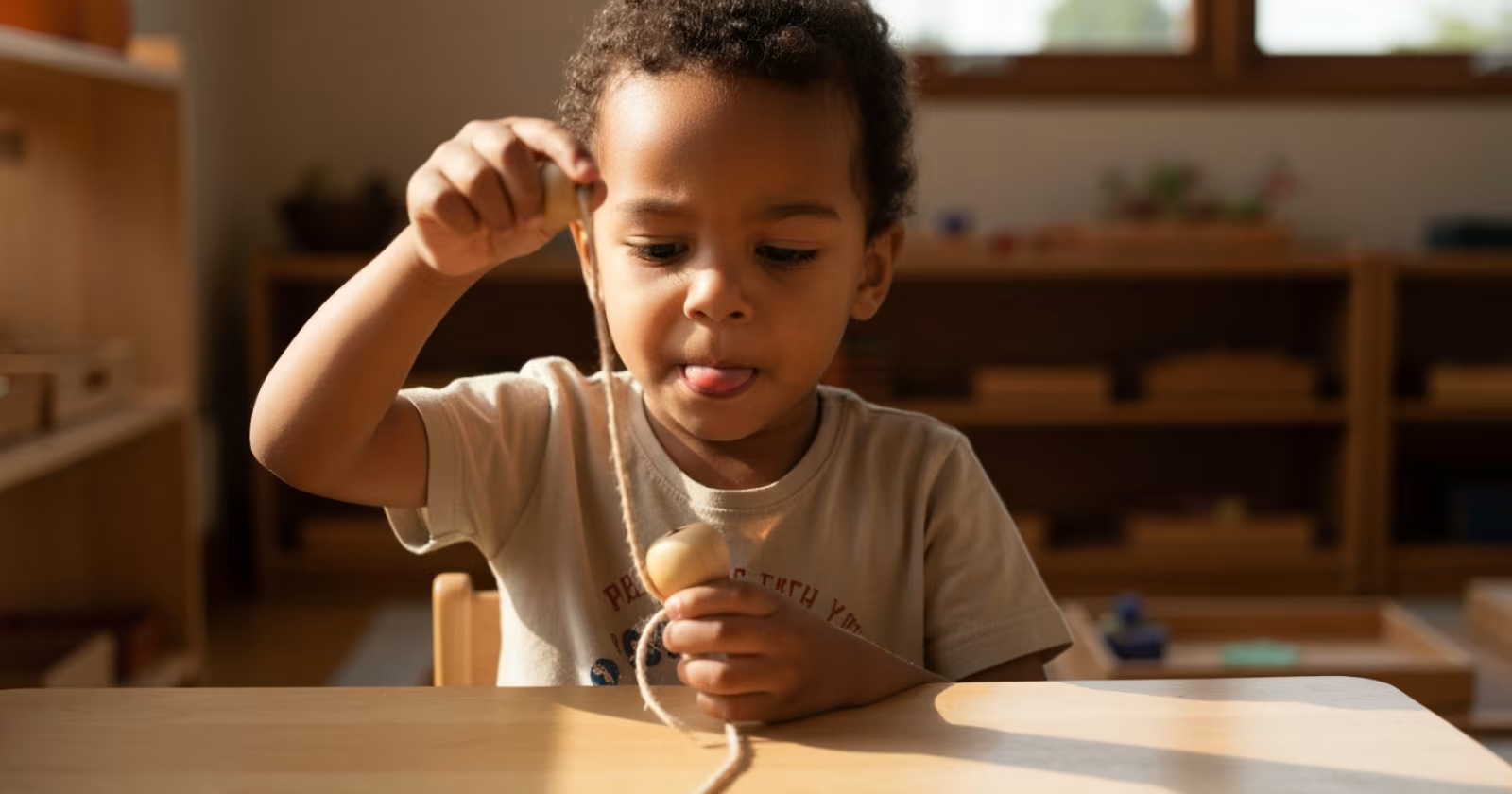
She stood at the kitchen counter, barely tall enough to see over it, pouring milk into her cereal bowl. Her hand shook. Some milk splashed onto the counter. But she didn’t call for help. She just wiped it with her sleeve and kept going.
And you stood in the doorway, watching. Your chest tight with something you couldn’t quite name. Pride, maybe. But also a strange, quiet ache — like watching a door open that would never fully close again.
That moment, small as it seems, is one of the most powerful shifts in your child’s life. And in yours. Let’s talk about what’s really happening inside both of you when it arrives.
What That Small Moment Actually Means for Your Child
When a child does something alone — tying a shoe, crossing a room to talk to another child, making a sandwich — it looks simple from the outside. But inside their mind, something enormous is taking shape. They are building what psychologists call self-efficacy. That’s a fancy way of saying: “I believe I can handle things.”
This belief doesn’t come from praise. It doesn’t come from watching someone else do it. It comes from doing it themselves, feeling the wobble, and getting through it anyway.
Think about a child who walks to the neighborhood shop for the first time. They’re not just buying bread. They’re learning that they can navigate the world without someone holding their hand. That feeling — “I did that” — becomes a brick in the foundation of who they are becoming.
A child’s confidence is not built by what we do for them. It is built by what we let them do for themselves — even when it’s messy, slow, or imperfect.
This is why rushing to help, even with the best intentions, can sometimes take away the very experience a child needs. Not every struggle is a crisis. Some struggles are how children grow legs strong enough to stand on.
Why This Moment Feels So Complicated for Parents
Here’s the part nobody warns you about. When your child starts doing things alone, you might feel a wave of emotions that don’t all make sense together. Joy and sadness. Relief and worry. Pride and a faint sense of loss.
This is completely normal. Your role as a parent has been to protect, guide, and be needed. When your child steps forward without you, it can feel like a thread loosening — even though it’s exactly what healthy development looks like.
There are a few reasons this transition feels harder than expected:
- Identity shift: A part of your identity as a parent is tied to being needed. Independence can feel like rejection, even though it isn’t.
- Fear of harm: Letting go means accepting that your child might fail, get hurt, or struggle — and that you won’t always be there to cushion it.
- Speed of change: One day they need you to button their shirt. The next, they’re doing it with their eyes half-closed. The pace can catch you off guard.
- Cultural pressure: In many Indian families, closeness and dependence are seen as signs of love. A child wanting to do things alone can feel like something is wrong, even when everything is right.
Understanding these feelings doesn’t make them disappear. But it helps you see them for what they are — signs that you love your child deeply, not signs that something is going wrong.
The Stages of “Doing It Alone” — What to Expect by Age
Independence doesn’t arrive all at once. It unfolds in layers, and each age brings its own version of “I’ll do it myself.” Here’s a rough guide to what this looks like across childhood.
| Age Range | Common “First Alone” Moments | What’s Developing Inside |
|---|---|---|
| 2–3 years | Feeding themselves, choosing clothes, saying “no” | Sense of will and personal preference |
| 4–5 years | Playing independently, dressing fully, small household tasks | Confidence in physical ability |
| 6–8 years | Walking to a friend’s house, managing homework, basic cooking | Trust in own decision-making |
| 9–11 years | Handling money, travelling short distances, resolving peer conflicts | Social independence and problem-solving |
| 12+ years | Managing schedules, emotional self-regulation, forming personal opinions | Identity and inner authority |
Every child moves through these at their own pace. A seven-year-old who still wants help brushing their hair is not “behind.” A four-year-old who insists on pouring their own water is not being defiant. They are both right on time for their own journey.
How to Support Independence Without Pushing or Pulling Back
The hardest part of parenting independence is finding the middle ground. You don’t want to hover so close that your child never stretches. But you also don’t want to step back so far that they feel abandoned. Here’s what I’ve found works.
Wait five seconds before helping. When your child struggles with something — a zipper, a math problem, a social situation — count to five silently. Often, they’ll figure it out in those few seconds. If they don’t, they’ll ask. That asking is healthy too.
Narrate their success back to them. Instead of saying “Good job,” try something specific: “You poured that whole glass without spilling. You held it really steady.” This helps them see exactly what they did right, so they can repeat it.
Let them fail in safe spaces. A dropped egg on the kitchen floor is not a disaster. It’s a lesson in grip and gravity. Save your protective instincts for real danger and let small failures be small.
Create “alone tasks” that match their age. Give your child one responsibility that is entirely theirs. Maybe it’s watering a plant, setting the dinner table, or packing their school bag. Ownership builds confidence faster than practice.
Talk about your own firsts. Tell your child about the first time you did something alone. Were you nervous? Did you make mistakes? Children feel braver when they know that even grown-ups were once scared beginners.
Resist the urge to redo what they did. If your child makes their bed and it looks lumpy, leave it. If they fold their clothes a little crooked, let it be. Fixing their work tells them their effort wasn’t good enough. Leaving it tells them it was.
When Independence Feels Scary — For the Child
Not every child rushes toward independence with open arms. Some children are cautious by nature. They hang back. They want to watch first, try later. This is not a problem to fix.
Anxious children, especially, may need more time and more gentle encouragement. Forcing them into independence before they’re ready can backfire — it creates fear, not confidence. The goal is to stretch their comfort zone, not shatter it.
If your child seems genuinely distressed about doing things alone — not just reluctant, but deeply fearful — it’s worth paying attention. Sometimes anxiety needs more support than encouragement alone can offer. Trust your instincts on this. You know your child better than any article ever will.
There will be mornings when your child ties their own shoes and runs out the door without looking back. And there will be nights when that same child crawls into your lap and wants to be held like a baby. Both versions are real. Both are needed.
Independence is not a straight line. It loops and curves and doubles back on itself. Your child will reach for the world and then reach for you, again and again, for years to come.
The fact that they can walk away from you is not the thing that matters most. It’s that they know, every single time, they can walk back.