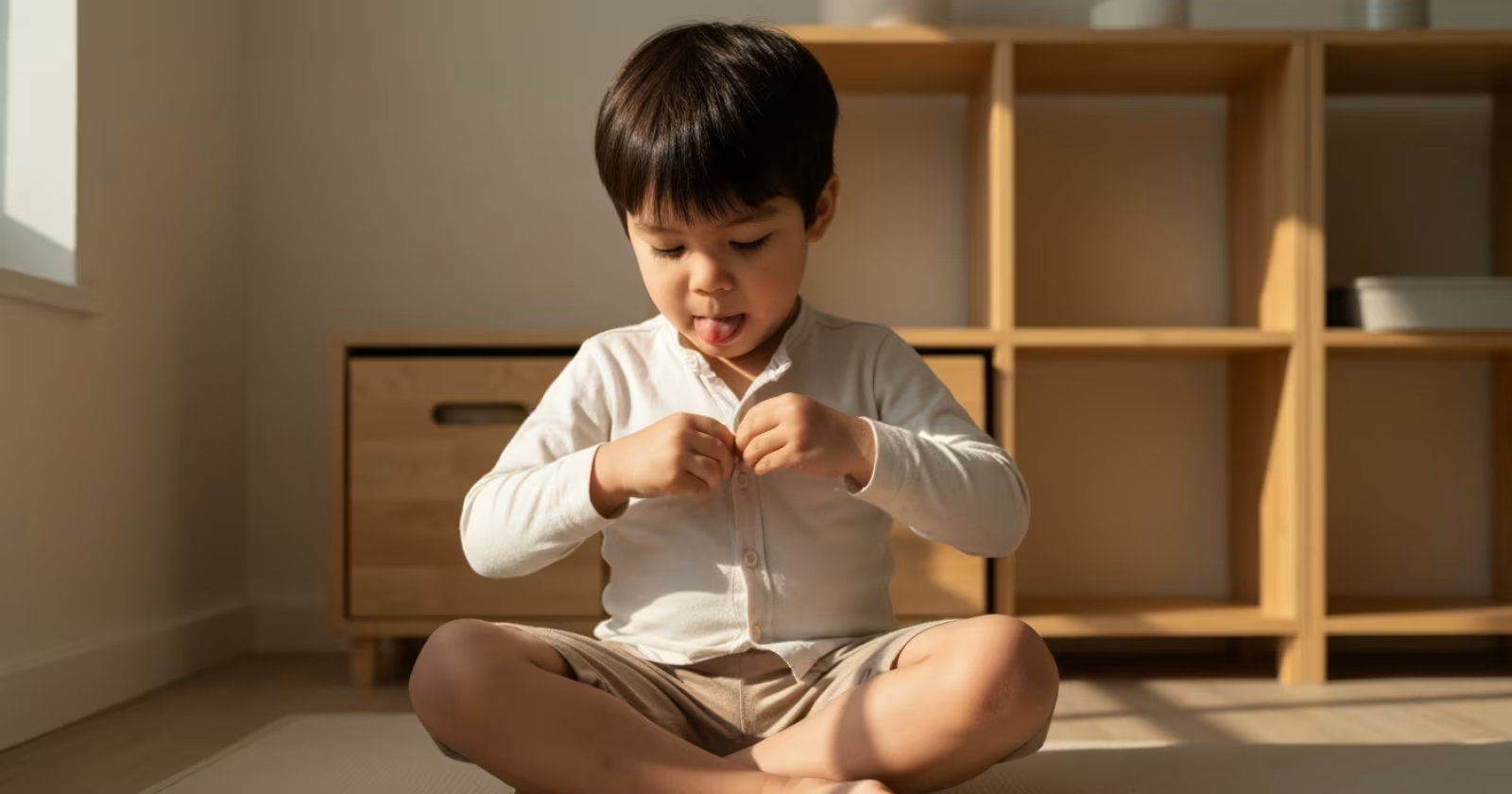
The school bag isn’t packed. One shoe is missing. Your child is moving in slow motion while you’re running on fast-forward. And somewhere between the third reminder and the raised voice, the morning falls apart — again.
By the time the child reaches school, they’re already unsettled. By the time you reach work, you’re already drained. And both of you started the day feeling disconnected from each other.
But what if the problem was never about speed? What if the real issue was that the morning had no emotional anchor — no rhythm that helped your child’s brain settle before the world rushed in?
A Calm Morning Isn’t About Doing Less — It’s About Feeling Safe
Most advice about morning routines focuses on logistics. Wake up earlier. Lay out clothes the night before. Make a checklist. And yes, those things help. But they miss something deeper.
Children don’t just need an organized morning. They need a morning that feels predictable and emotionally warm. When a child wakes up knowing exactly what comes next — and knowing that the first face they see isn’t stressed — something shifts inside their nervous system.
Think about a child who wakes up to gentle words versus one who wakes up to “Hurry up, we’re late.” Both children get dressed. Both eat breakfast. But their brains are in completely different states. One is regulated. The other is already in fight-or-flight mode before the day has even started.
The first 20 minutes after waking up set the emotional tone for your child’s entire day — not the alarm clock, not the schedule, but the feeling in the room.
I’ve seen this pattern with so many families. The parents who shifted their mornings from rushing to anchoring didn’t just get smoother mornings. They got calmer children at school, fewer meltdowns in the evening, and a surprising sense of closeness that built over weeks.
Why Mornings Are So Hard for Children’s Brains
Here’s something most parents don’t realize. A child’s prefrontal cortex — the part of the brain responsible for planning, focus, and impulse control — is still developing well into their twenties. In the morning, especially right after waking, this part of the brain is sluggish. It hasn’t fully “come online” yet.
So when we ask a six-year-old to wake up, remember their tasks, manage their time, and regulate their emotions — all within 30 minutes — we’re asking their brain to do something it physically struggles with. It’s not defiance. It’s development.
There are specific reasons mornings feel especially overwhelming for children:
- Their cortisol levels (the stress hormone) are naturally highest in the first hour after waking, making them more reactive to pressure.
- Transitions are hard for young brains — moving from sleep to wakefulness is one of the biggest transitions of the day.
- Sensory input hits all at once — lights, sounds, textures of clothes, temperature of water — and their brain hasn’t had time to adjust.
- They mirror parental stress. If you’re anxious, their nervous system picks it up instantly, even without words.
- They lack a sense of time. Telling a child “we have ten minutes” means almost nothing to a brain that doesn’t yet understand time as adults do.
When you understand this, the morning stops being a battle of wills. It becomes a design problem. And design problems have solutions.
A Morning Rhythm That Actually Works
I want to share a simple framework — not a rigid schedule, but a rhythm. You can adapt it to your family’s life, your child’s age, and your own capacity. The goal isn’t perfection. It’s connection and predictability.
| Phase | Duration | What Happens | Why It Helps |
|---|---|---|---|
| Wake-Up Buffer | 5–10 min | Gentle wake-up, quiet presence, soft light | Eases the sleep-to-wake transition |
| Connection Moment | 2–3 min | A hug, a few calm words, eye contact | Signals safety to the nervous system |
| Body Routine | 15–20 min | Wash, dress, brush — same order daily | Predictability reduces decision fatigue |
| Fuel Time | 10–15 min | Sit-down breakfast, no screens | Grounds the body through sensory input |
| Departure Ritual | 2–3 min | A specific goodbye — handshake, phrase, wave | Creates emotional closure before separation |
Let me walk through the pieces that make the biggest difference.
The wake-up buffer. Instead of waking your child at the last possible minute, build in 5 to 10 minutes of gentle transition. Sit beside them. Rub their back. Let natural light come in slowly. This isn’t wasted time — it’s the single most impactful change you can make. A child who wakes gently is a child whose brain has time to regulate before demands begin.
The connection moment. Before any task, before “go brush your teeth,” offer two minutes of warmth. A hug. A quiet “good morning, I’m glad you’re here.” This tiny moment fills your child’s emotional tank. Children who feel connected cooperate more — not because they’re being obedient, but because their brain isn’t in defense mode.
The same order, every day. Wash face, then dress, then eat — or whatever sequence works for your home. The specific order matters less than the consistency. When a child’s body knows what comes next, they don’t need to be told. Over time, the routine becomes automatic, freeing up their mental energy for the things that actually matter at school.
No screens during the morning routine. This one is hard, I know. Especially when a cartoon buys you 15 minutes of peace. But screens flood a child’s brain with dopamine and fast-moving stimuli first thing in the morning. When the screen goes off, everything else feels boring and slow by comparison. The meltdown that follows isn’t about the screen — it’s about the neurochemical crash.
A departure ritual. This is often overlooked, but it matters deeply. A special handshake. A specific phrase you say every day. Three kisses on the forehead. Whatever it is, make it yours. This ritual tells your child’s brain: “This goodbye is safe. I know what happens here. I will see them again.” For children with separation anxiety, this one change can be transformative.
When the Morning Still Falls Apart
Some mornings will be terrible. Your child will refuse to get dressed. You’ll lose your patience. The routine will crumble. That’s not failure — that’s life with a developing human.
What matters is the pattern over time, not any single morning. If seven out of ten mornings feel calmer than they used to, something real is shifting in your child’s nervous system. They’re learning that mornings are safe. That transitions don’t have to be scary. That the day begins with warmth, not war.
If you find that calm mornings are consistently impossible despite your best efforts, pay attention. Chronic morning dysregulation — daily screaming, physical resistance, intense anxiety — can sometimes signal sensory processing differences, anxiety, or sleep issues that deserve a deeper look with a professional. Trust your instinct if something feels bigger than a phase.
There will be days when you skip the buffer and rush through breakfast and forget the goodbye ritual entirely. On those days, forgive yourself quickly. Then come back to the rhythm tomorrow. Your child doesn’t need a perfect parent. They need a parent who keeps trying to make the first minutes of the day feel like home.
The morning is not just a departure point. It’s a message you send your child about what the world feels like — and whether they can handle it. Make that message a gentle one.