She stood at the kitchen counter, arms crossed, watching her four-year-old try to pour water from a heavy jug. Water everywhere. Glass wobbling. Every instinct screaming to step in and do it herself. But she didn’t. Because something had changed — not in the child, but in the home around her.
Sometimes the biggest shifts in a child’s behavior don’t come from a new parenting strategy or a conversation. They come from rearranging a shelf. Moving a hook lower. Putting a small pitcher where a big one used to be.
This is the quiet revolution that many parents miss — and once you see it, you can never unsee it.
Your Home Is Talking to Your Child
Every room in your house sends a silent message. When everything is placed high, locked away, or sized for adults, the message is clear: you need someone else to do things for you. A child hears that message dozens of times a day without a single word being spoken.
Now imagine the opposite. A low hook where a child can hang their own bag. A small shelf with two plates and a cup they can reach. A step stool that lives permanently in the bathroom. The message changes completely: you can do this yourself.
This idea — making a child’s environment accessible so they can act independently — isn’t new. It comes from a concept called the “prepared environment,” widely used in Montessori education. But you don’t need a Montessori school to use it. You just need to walk through your home and see it from three feet off the ground.
A child who can do things for themselves doesn’t just become more capable — they start to believe they are capable. And that belief changes everything.
I’ve seen parents spend months trying to teach independence through words. “You’re a big boy now.” “Try it yourself.” But the home was still designed so the child literally could not try. The environment was working against the very thing they were asking for.
Why Children Stop Trying (and It’s Not Laziness)
When a child asks you to do something they could technically do themselves, it’s easy to feel frustrated. But here’s what’s actually happening inside their brain. Every time they face an obstacle they can’t solve — a shelf too high, a door handle too stiff, clothes folded in a drawer they can’t open — their brain registers a tiny moment of helplessness. One moment is nothing. But thirty of those moments every single day? That adds up.
Children between ages two and six are in a critical window for developing what psychologists call executive function skills — the ability to plan, initiate action, and follow through. These skills grow through practice, not instruction. A child builds them by doing, failing, adjusting, and doing again.
When the environment blocks that cycle, a few things start to show up:
- The child asks for help with tasks they once did alone
- They wait passively instead of starting things on their own
- They get frustrated quickly when something doesn’t work the first time
- They say “I can’t” before even trying
- Morning routines feel like a constant battle of reminders
None of this means your child is lazy or defiant. It usually means the world around them hasn’t been set up to let them succeed. And the beautiful part is — this is one of the easiest things to fix.
Small Shifts That Change Daily Life
You don’t need to renovate your house or buy expensive furniture. Most of the changes that matter are surprisingly small. Here’s what I’d suggest starting with — pick just one or two that feel right for your child’s age.
Lower one shelf in the kitchen. Put a couple of plates, a cup, and a small water bottle where your child can reach them. When they’re thirsty, they don’t need to ask. When it’s snack time, they can get their own plate. This single change often has the biggest ripple effect.
Create a getting-ready station by the front door. A low hook for their bag, a small basket for shoes, and a mirror at their height. Mornings become less about you giving instructions and more about them following a visible routine.
Move their everyday clothes to the lowest drawer or shelf. Keep only a few options — too many choices overwhelm young children. Two shirts, two pants. Let them pick and dress themselves, even if the result is mismatched. The pride on their face matters more than the outfit.
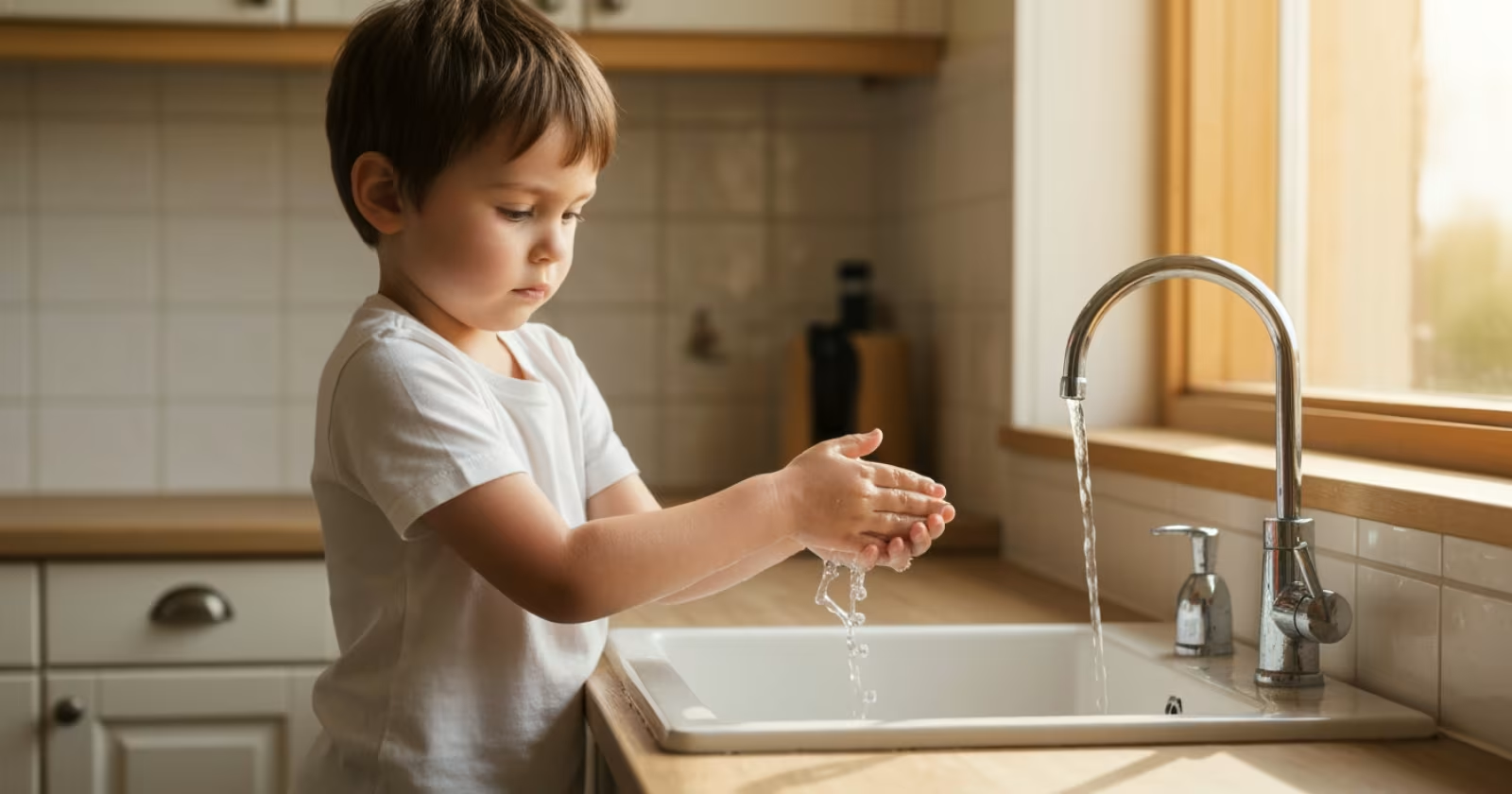
Put a step stool in the bathroom permanently. Not tucked away in a closet — right there, always available. Hand-washing, tooth-brushing, even looking in the mirror become things they do, not things done to them.
Set up a small cleaning station. A child-sized broom, a dustpan, a couple of cloths at their level. When they spill something — and they will — they can clean it up themselves. This isn’t about chores. It’s about giving them the tools to handle the small messes of life without shame.
| Area of Home | Simple Change | What It Builds |
|---|---|---|
| Kitchen | Low shelf with plate, cup, water | Self-sufficiency, decision-making |
| Entrance | Low hooks, shoe basket, mirror | Routine ownership, responsibility |
| Bedroom | Accessible drawer with few clothing choices | Choice-making, dressing skills |
| Bathroom | Permanent step stool | Hygiene independence, confidence |
| Living area | Child-sized cleaning tools | Problem-solving, self-correction |
The key is consistency. Once something is accessible, resist the urge to do it for them when you’re in a rush. Yes, it will be slower at first. Yes, there will be spills. But every time they complete a task alone, a small fire lights inside them — and that fire is called competence.
The Hardest Part Isn’t the Home — It’s Letting Go
I want to be honest here. Rearranging your shelves is the easy part. The hard part is watching your child struggle with a zipper for two full minutes when you could do it in three seconds. The hard part is seeing water on the floor and not lunging for the cloth yourself.
Your instinct to help comes from love. There’s nothing wrong with it. But independence isn’t built in the moments when things go smoothly. It’s built in the wobble — the messy, imperfect, painfully slow moments where a child figures it out on their own.
You don’t have to step back from everything at once. Start with one area. One shelf. One hook. Watch what happens over a week or two. You’ll likely notice your child standing a little taller. Asking for help a little less. Maybe even helping a younger sibling.
And here’s something no one tells you: when your child becomes more independent, you don’t become less needed. You become needed for the things that truly matter — the conversations, the comfort, the connection. The stuff that no shelf rearrangement can replace.
Parenting is full of complicated problems. But sometimes, the answer is as simple as moving a cup to a lower shelf — and then trusting the small person reaching for it.