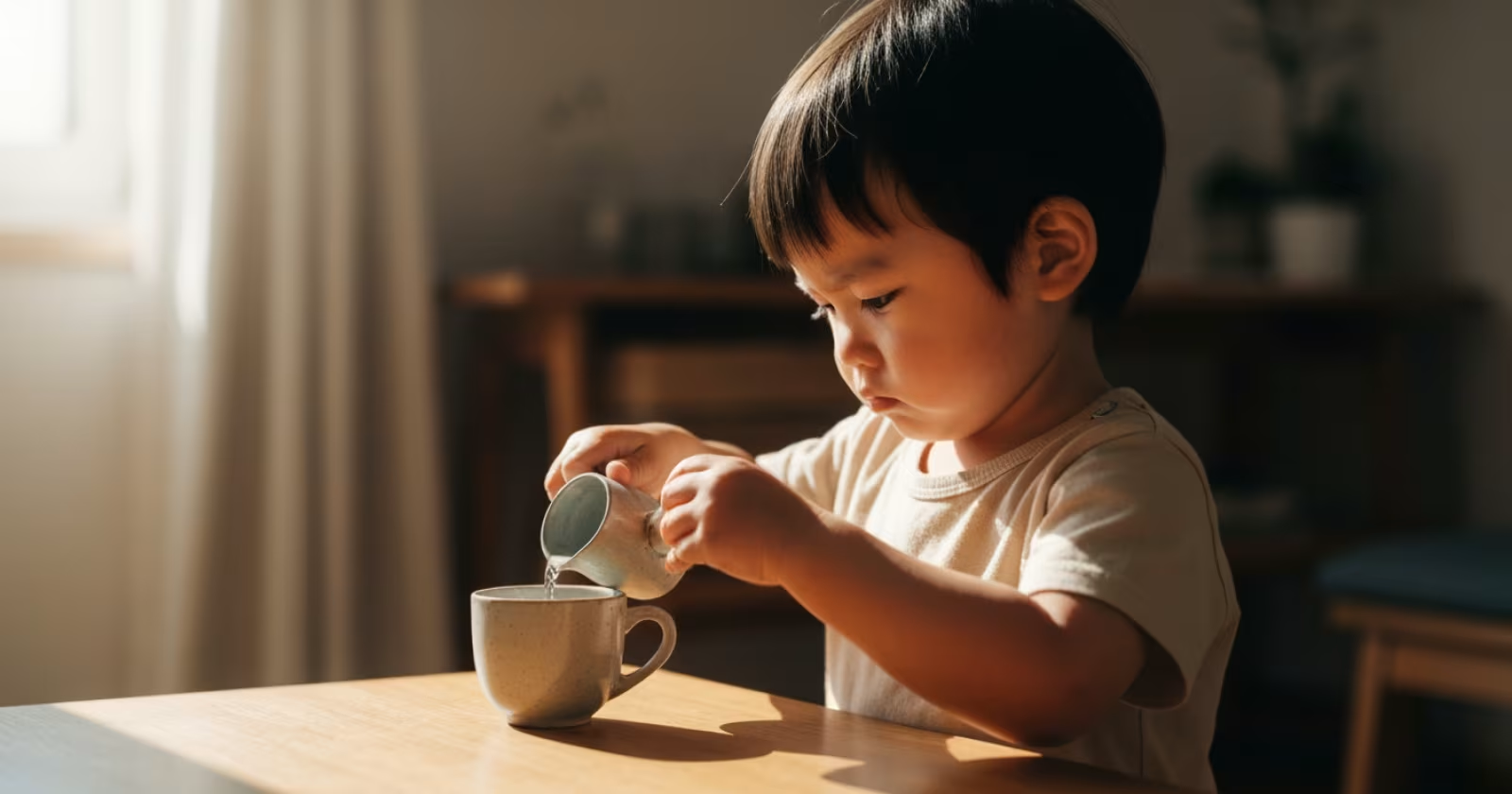
Your three-year-old is pouring water from one cup to another. Back and forth. Again and again. There’s water on the table, on the floor, on her shirt. Your first instinct is to stop her, clean up, move on.
But what if that spilling — that messy, repetitive, seemingly pointless activity — is exactly how her brain is wiring itself right now? What if the most powerful thing you could do is step back and let her keep pouring?
This is the heart of what Montessori education is built on. And once you understand why, it changes how you see not just school — but your child.
It Starts With Trusting the Child
Montessori is not a brand. It’s not a type of toy or a style of shelf. It’s a way of seeing children — developed over a hundred years ago by Dr. Maria Montessori, an Italian physician who spent years observing how children actually learn when left in the right environment.
What she discovered was simple but radical. Children don’t need adults to push information into their heads. They are born with a deep, natural drive to learn. What they need is the right environment, the right tools, and adults who know when to step in — and when to step back.
Think of a toddler who insists on putting on their own shoes. They’re slow. They get frustrated. You could do it in five seconds. But that struggle is not a problem to fix. It’s learning happening in real time. Montessori education is built around protecting moments like these.
The goal is not to teach the child what to think — but to help the child learn how to think, choose, and do things independently.
This is why Montessori classrooms look so different. You won’t see rows of desks facing a teacher. You’ll see children moving freely, choosing their own work, sitting on the floor if they want to. It looks unusual. But there’s deep intention behind every detail.
Why Children Respond to This Approach
Children’s brains develop in waves. Maria Montessori called these “sensitive periods” — windows of time when a child is naturally drawn to learning a specific skill. A two-year-old obsessed with opening and closing doors is in a sensitive period for movement and hand coordination. A four-year-old asking “why” about everything is in a sensitive period for language.
Traditional schooling often teaches the same thing to every child at the same time. Montessori flips this. It follows the child’s internal timeline. When a child is ready and interested, learning happens almost effortlessly.
Here are some core elements that make Montessori classrooms work differently:
- Mixed-age groups: Children aged 3 to 6 learn together. Younger children watch and learn from older ones. Older children deepen their understanding by helping younger peers.
- Hands-on materials: Instead of worksheets, children use specially designed objects — wooden beads for counting, sandpaper letters for tracing, pouring exercises for coordination.
- Uninterrupted work cycles: Children get long stretches of time (often 2 to 3 hours) to choose and focus on activities without being interrupted by bells or schedules.
- The prepared environment: Everything in the classroom is child-sized, accessible, and organized. Children can reach their own materials, clean up after themselves, and move independently.
- The role of the teacher: Called a “guide,” the adult observes more than instructs. They introduce materials when the child is ready, then step aside.
This isn’t chaos. It’s structured freedom. The boundaries are clear, but within those boundaries, the child leads.
| Traditional Classroom | Montessori Classroom |
|---|---|
| Teacher-led instruction | Child-led exploration |
| Same-age groups | Mixed-age groups (3-year span) |
| Fixed schedule with short periods | Long, uninterrupted work cycles |
| Grades and rewards | Internal motivation and self-assessment |
| Uniform curriculum pace | Individualized learning path |
| Abstract concepts first | Concrete, hands-on materials first |
What You Can Bring Home — Even Without a Montessori School
Here’s what I want every parent reading this to know: you don’t need to enroll your child in a Montessori school to use these ideas. The philosophy works beautifully at home, in small, everyday moments.
Create a “yes” space in your home. Pick one area — even a corner — where everything is safe and accessible for your child. Put a few activities on a low shelf. A small pitcher for pouring practice. Crayons and paper. A basket of books they can reach. When children can choose for themselves, they build confidence and focus.
Slow down and let them struggle a little. When your child is buttoning a shirt or spreading butter on bread, resist the urge to take over. Say, “I see you’re working on that. Take your time.” That patience teaches them far more than doing it for them ever could.
Involve them in real life. Montessori places enormous value on “practical life” activities. Let your child help fold towels, wash vegetables, sweep the floor. These aren’t chores to a young child — they’re meaningful, grown-up work. And they build coordination, concentration, and a sense of belonging.
Observe before you intervene. This is the hardest one. When your child is doing something that puzzles you — stacking blocks just to knock them down, arranging stones in a line — watch first. Ask yourself: what are they learning right now? Often, the answer is more than you’d expect.
Limit the choices, but give real ones. Instead of asking a toddler “What do you want to wear?” — which is overwhelming — offer two options. “The blue shirt or the red shirt?” This respects their need for autonomy while keeping things manageable.
None of these require expensive materials. They require a shift in perspective — from managing your child to partnering with them.
When It Feels Hard to Step Back
I want to be honest about something. This approach asks a lot of parents. It asks you to be patient when you’re running late. To let your child fail a little when every instinct says to help. To trust a process you can’t always see results from immediately.
Some days, you won’t have the energy. Some mornings, you’ll put the shoes on for them because you simply have to leave the house. That’s not failure. That’s life.
Montessori is not about being a perfect parent. It’s about holding a quiet belief that your child is capable — and showing them that belief in small, ordinary moments, as often as you can.
You don’t have to change everything at once. Start with one thing. Maybe tonight, let your child pour their own water at dinner. Watch their face when they do it themselves. That look — that concentration, that pride — will tell you everything you need to know about why this works.
The most powerful education doesn’t always look like teaching. Sometimes, it looks like a parent standing quietly nearby, believing their child can figure it out.