It’s 7:45 in the morning. Your child is standing in front of the wardrobe, refusing every shirt you hold up. You’re already running late. Your voice is getting tighter. And somewhere inside, you’re wondering why getting dressed has become a daily battle.
Now imagine a different morning. Your child walks to a low shelf, picks between two pre-selected outfits, puts one on — maybe inside out, but on — and comes to breakfast with a quiet pride on their face. No negotiation. No tears.
The difference between these two mornings isn’t about having an “easier” child. It’s about one deceptively simple shift that Montessori educators have used for over a hundred years. And once you understand it, it changes almost everything.
The Shortcut Is Not What You Think
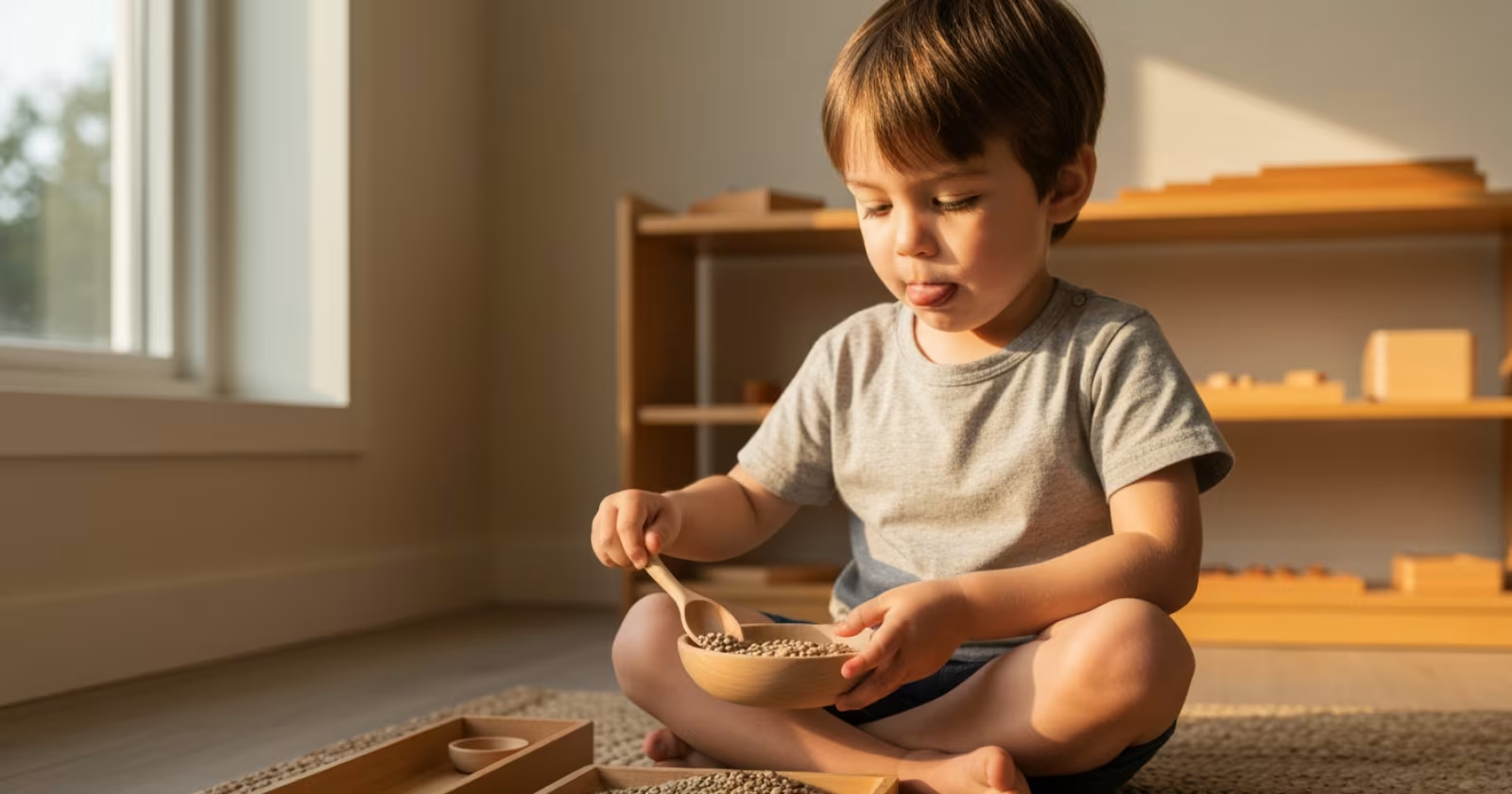
Most parenting shortcuts are about doing less or doing things faster. This one is different. The Montessori secret is this: set up the environment so your child can do it themselves. That’s it. Instead of managing your child’s every move, you redesign the space around them so they can succeed without you hovering.
It sounds too simple. But think about what actually drains you each day. It’s the constant directing. “Put on your shoes.” “No, not that cup.” “Come here.” “Sit down.” “Let me do it.” Every instruction is a micro-negotiation. Every micro-negotiation costs both of you energy.
When a child can reach their own water bottle, choose their own snack from two options, or hang their own bag on a low hook — you don’t need to instruct. The environment does the parenting for you.
The most powerful thing a parent can do is not to do more — but to arrange things so the child can do more.
A parent I know once told me she spent an entire Sunday lowering hooks, reorganizing one kitchen shelf, and placing her toddler’s clothes in a small open rack. She said Monday morning felt like a completely different house. Not perfect — but calmer. Her child wasn’t “behaving better.” The friction was just gone.
Why Children Push Back Against Help They Didn’t Ask For
Here’s something we forget: children are wired to seek independence. From about 18 months onward, a child’s brain is building what psychologists call executive function — the ability to plan, choose, and act. Every time a child tries to do something alone, they are literally building neural pathways for self-regulation.
When we constantly step in — even with love — we interrupt that process. The child feels it, even if they can’t name it. That frustration comes out as resistance, tantrums, or the classic “I do it myself” meltdown.
Maria Montessori noticed this over a century ago. She called it the child’s natural drive toward “functional independence.” She built entire classrooms around it. But you don’t need a classroom. You need a few small changes at home.
- Children between 2 and 6 are in a sensitive period for order and independence — they crave doing things on their own
- A child who is told what to do 50 times a day experiences decision fatigue in reverse — they stop trying
- When the environment is set up for adult convenience only, children feel like guests in their own home
- Resistance at getting dressed, eating, or leaving the house often stems from a lack of autonomy, not defiance
This doesn’t mean children should run the house. It means we can give them real, bounded choices within a structure we control. That’s the balance Montessori gets right.
How to Set Up Your Home So It Does the Work for You
You don’t need to buy special furniture or follow a Pinterest board. Most of this costs nothing. It just takes one afternoon of looking at your home through your child’s eyes — literally, from their height.
Start with one friction point. What is the most stressful recurring moment in your day? Morning dressing? Mealtimes? Leaving the house? Pick one. Just one. Then redesign the environment around that single moment.
Lower things. Hooks for bags and jackets. A small shelf with two shoe options. A step stool near the sink. A water bottle within reach. The goal is that your child can complete the task without calling for you.
Offer two choices, not twenty. Lay out two outfits the night before. Offer a banana or an apple — not “what do you want for snack?” Open-ended questions overwhelm small children. Limited choices empower them.
Create visual routines. A simple sequence of three pictures on the wall — shoes, bag, door — helps a child follow a routine without verbal reminders. You stop being the alarm clock. The wall chart does it.
Let “good enough” be enough. The shirt might be backwards. The banana might be peeled in a chaotic way. The water might spill. This is the cost of independence — and it is always worth paying.
| Daily Friction Point | Environment Fix | Time to Set Up |
|---|---|---|
| Getting dressed | Low drawer or open shelf with 2 outfit choices | 20 minutes |
| Snack battles | One reachable shelf with 2–3 pre-approved snacks | 10 minutes |
| Shoe struggles at the door | Low basket with today’s shoes only | 5 minutes |
| Handwashing resistance | Sturdy step stool and child-height towel hook | 10 minutes |
| Toy cleanup meltdowns | Fewer toys out, clear bins with picture labels | 30 minutes |
Rotate, don’t accumulate. One of the most overlooked Montessori principles is keeping the environment uncluttered. Fewer toys on the shelf means more focused play. Put half the toys away and swap them every two weeks. Children rediscover old toys like they’re brand new.
Narrate instead of instruct. Instead of “Go wash your hands,” try “The step stool is by the sink.” Instead of “Pick up your toys,” try “The blocks go in the blue bin.” You’re pointing to the environment, not commanding the child. It feels different to them. And to you.
When It Doesn’t Work Right Away
Some children take to this immediately. Others resist the change — especially if they’re used to being directed. That’s normal. A child who has always been dressed by a parent may feel unsure when suddenly asked to choose. Go slow. Sit nearby. Let them fumble.
And honestly, some days it will still be chaos. You’ll be late. The shoes will be on the wrong feet. The snack shelf will get raided at 6 AM. That doesn’t mean the system failed. It means your child is learning — and learning is messy by nature.
The real shift isn’t in your home. It’s in your role. You move from being a manager to being a guide. You stop doing everything for your child and start setting things up so they can do it themselves. It’s less work in the long run — but it requires patience in the beginning.
There’s no perfect setup. There’s no perfect parent. There’s just the willingness to look at your home, look at your child, and ask one honest question: what can I step back from today?
Sometimes the bravest thing a parent can do is not help.