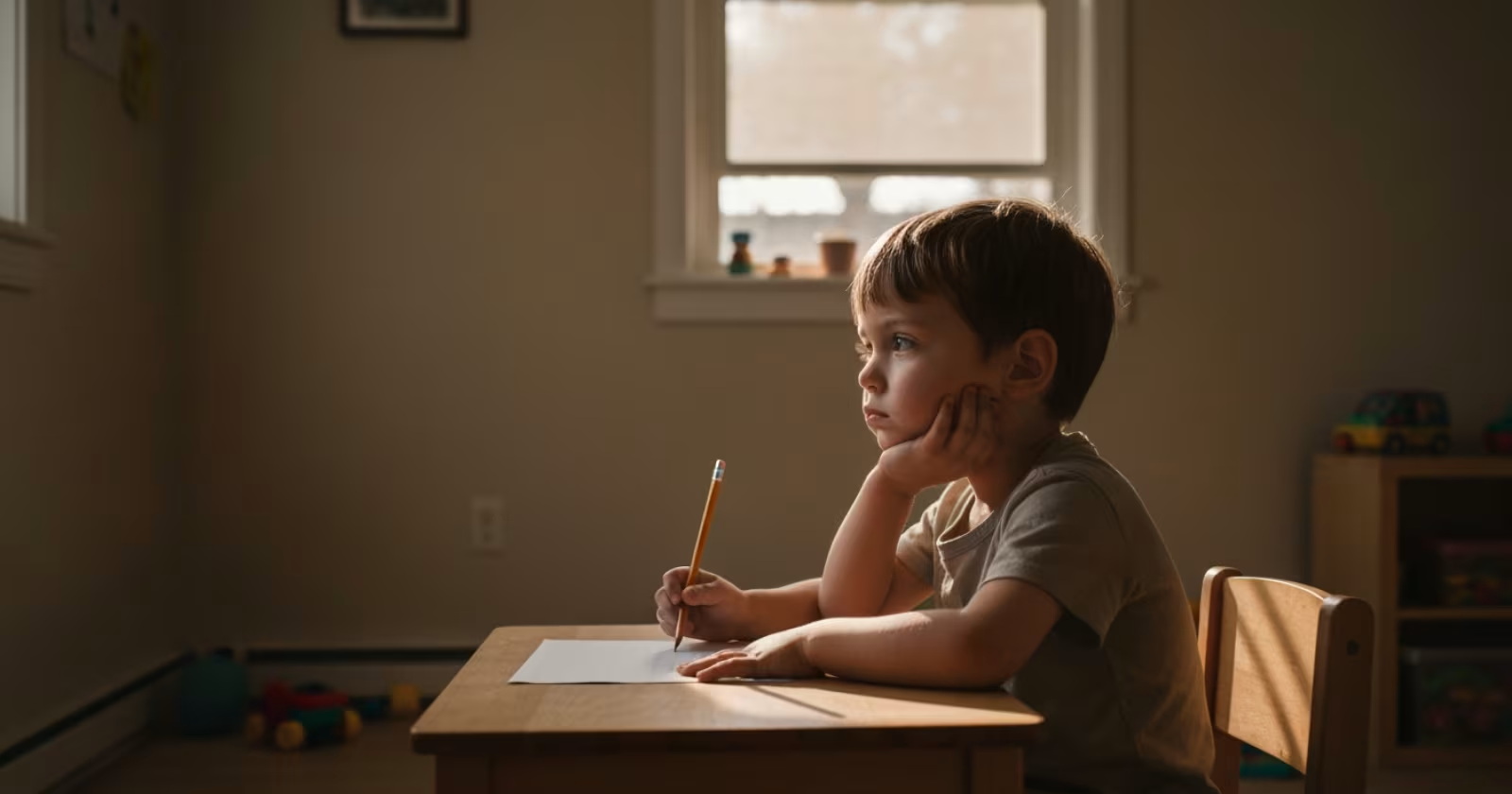
She was sitting right there with her crayons. You looked away for thirty seconds. When you turned back, she had abandoned the drawing, pulled out three other toys, and was now standing at the window watching a bird. You sighed. “Why can’t she just focus?”
It’s a thought that crosses almost every parent’s mind — sometimes with frustration, sometimes with worry. But here’s what I’ve learned after years of observing children and talking to parents: a child’s wandering attention is rarely about the child. It’s almost always telling you something about the space around them.
And once you start listening to what their attention is actually saying, everything shifts.
The Focus Isn’t Broken — The Signal Is
We tend to think of attention as a character trait. Some kids “have it,” others don’t. But attention in young children works more like a signal — it gets stronger or weaker depending on the environment it’s moving through. A noisy, cluttered, unpredictable space scatters that signal. A calm, predictable one strengthens it.
Think about a child trying to do a puzzle on the kitchen table while the TV plays in the next room, a sibling runs past, and a parent talks on the phone. That child isn’t distracted because something is wrong with their brain. They’re distracted because everything around them is competing for the same limited resource — their attention.
Now picture the same child, same puzzle, in a quiet corner with soft light and no background noise. You’d likely see a completely different level of focus. Same child. Different environment. Different result.
A child’s attention span doesn’t just measure their ability to focus — it mirrors the conditions you’ve placed around them.
This doesn’t mean you need a perfectly silent home. That’s not realistic, and children do need to learn to manage some distraction. But it does mean that before we label a child as “unfocused” or “hyperactive,” we owe it to them to look at what their world feels like from their height, their ears, their eyes.
Why the Environment Matters More Than We Think
Children’s brains are still building the architecture for what psychologists call executive function — the set of mental skills that help us plan, focus, remember instructions, and manage multiple tasks. This architecture doesn’t finish developing until well into the twenties. In young children, it’s incredibly fragile and heavily shaped by what surrounds them.
When a child’s environment is chaotic, overstimulating, or emotionally tense, their brain goes into a kind of survival mode. It starts scanning for threats or new inputs instead of settling into one task. This isn’t a flaw. It’s actually a smart response — the brain is doing exactly what it’s designed to do in an unpredictable space.
Here are some environmental factors that quietly chip away at a child’s ability to focus:
- Too many toys or materials visible at once, creating decision fatigue
- Constant background noise — TV, music, loud appliances — even when no one is actively watching or listening
- Frequent interruptions during play, even well-meaning ones like “What are you making?”
- Emotional tension between adults in the home, which children sense even when nothing is said aloud
- Rapid screen content that trains the brain to expect constant novelty and fast rewards
None of these make you a bad parent. Most homes have at least two or three of these going on at any given time. But recognizing them is the first step toward understanding what your child’s scattered focus is really trying to tell you.
| Environment Type | What the Child’s Attention Does | What It Looks Like |
|---|---|---|
| Overstimulating (loud, cluttered, busy) | Jumps rapidly between activities | Starts many things, finishes nothing |
| Emotionally tense | Becomes hypervigilant or withdrawn | Clings to parent or zones out |
| Screen-heavy | Seeks constant novelty | Gets bored quickly with non-screen activities |
| Calm and predictable | Settles and deepens | Engages longer, explores more fully |
| Nature-rich or open-ended | Becomes self-directed | Invents games, talks to self, stays curious |
Small Shifts That Help Children Settle Into Focus
You don’t need to redesign your entire home. Small, intentional changes can make a surprising difference. Here’s what I’ve seen work again and again with families.
Reduce what’s visible. Put away most toys and keep only four or five options accessible at a time. When a child opens a shelf and sees fifty choices, their brain stalls. When they see five, they choose. Rotate toys every week or two to keep things fresh without the overwhelm.
Protect their play from interruption. This is harder than it sounds, especially when their play looks “unproductive” — stacking the same blocks over and over, pouring water back and forth. But those repetitive moments are where deep focus is being built. Resist the urge to redirect, teach, or even praise mid-play. Let them finish.
Create one “calm corner” in your home. It doesn’t need to be fancy. A small rug, a cushion, a basket with a few books or simple toys. The point is that the child has one space that feels consistently quiet and predictable. Over time, they’ll start choosing that space when they need to settle.
Turn off background screens. If no one is actively watching, turn it off. Background television changes the rhythm of a room in ways children feel deeply, even when they’re not looking at the screen. The sudden laughs, music shifts, and dialogue fragments keep their brain in scanning mode.
Watch your own pace. Children absorb our energy. If you’re rushing, multitasking, or anxious, they feel it in their body and their attention reflects it. Even five minutes of you being fully still and present — sitting on the floor near them, not looking at your phone — can reset the emotional temperature of the room.
Give transitions a warning. Sudden shifts — “Okay, time to go” — are jarring to a child’s focus system. A simple “In five minutes, we’ll start cleaning up” gives their brain time to prepare for the change. It respects the attention they’ve already invested.
When It Might Be More Than the Environment
Sometimes, even in the calmest and most thoughtfully arranged spaces, a child truly struggles to focus. If you’ve made consistent environmental changes over several weeks and your child still cannot settle into any activity for even a brief, age-appropriate stretch, it’s worth having a gentle conversation with their pediatrician.
Conditions like ADHD — attention deficit hyperactivity disorder — are real, and they deserve compassionate, professional support. But even in those cases, environment still matters enormously. A child with ADHD in a calm space will always do better than in a chaotic one. The environment doesn’t replace professional help, but it lays the ground for everything else to work.
The point is never to blame yourself. It’s to become curious before becoming worried.
Parenting asks so much of us, and most of the time we’re doing it while exhausted, distracted, and unsure. You won’t get the environment perfect every day. No one does. But even noticing — even pausing to wonder, “What is this room feeling like for my child right now?” — is a powerful act of care.
Sometimes the most meaningful thing you can do for your child’s focus is not to fix them, but to quiet the world around them, just a little.