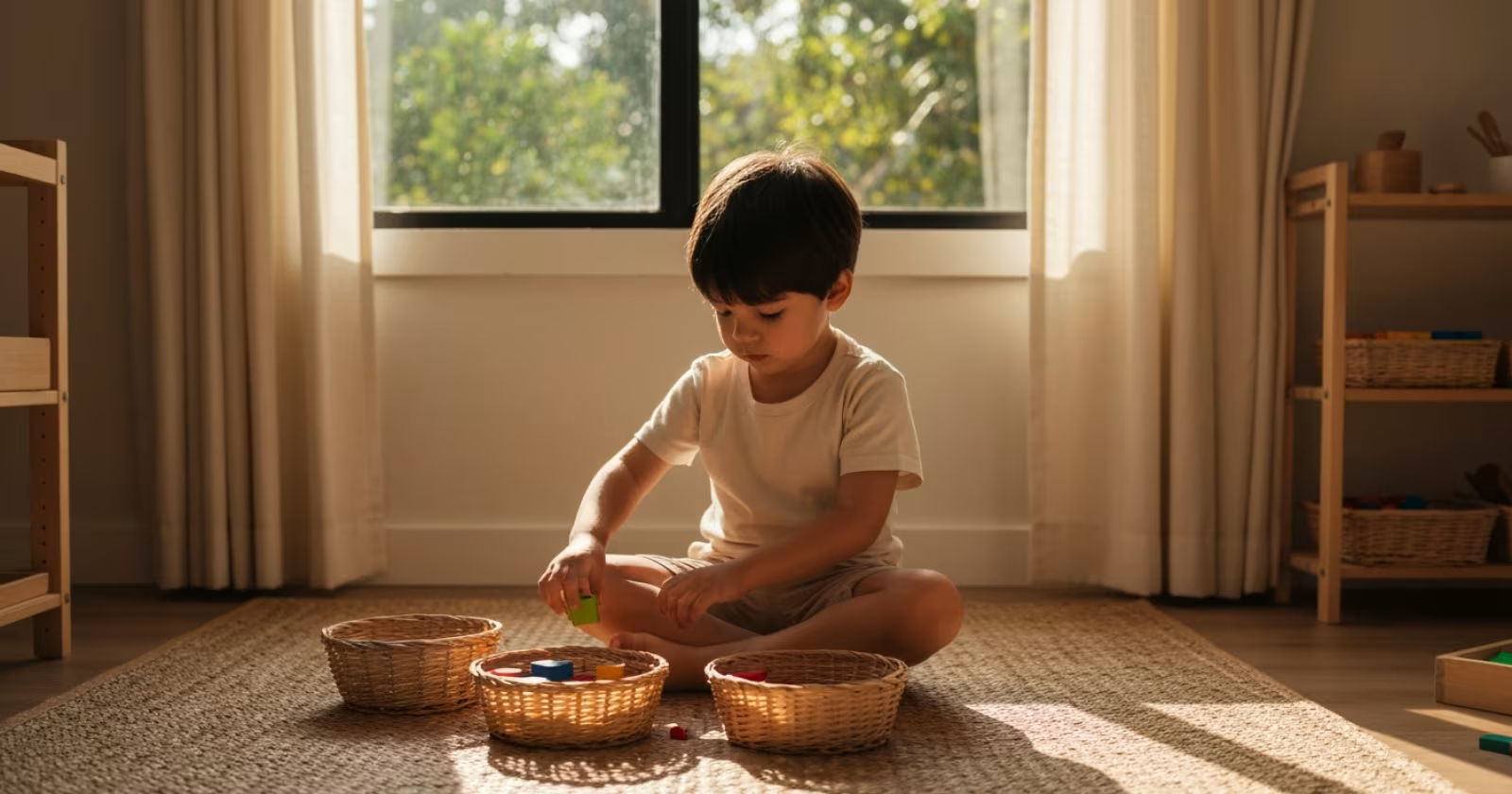
She stood in the kitchen doorway, watching her three-year-old struggle to pour water from a small jug. Half of it landed on the counter. The other half, somehow, on the floor. Her instinct screamed to step in, grab the jug, do it herself. But she waited. And then — the glass was full. And the look on that little face was something no toy or screen could ever produce.
That moment had nothing to do with a special school. No expensive wooden materials. No trained Montessori guide standing nearby. It happened in an ordinary kitchen, on an ordinary Tuesday morning.
If you’ve ever felt a quiet guilt about not being able to afford a Montessori school — or not having one near you — I want you to take a breath. Because the heart of what Montessori actually teaches lives much closer to home than you think.
The Real Gift Isn’t the School — It’s the Way You See Your Child
When Maria Montessori first developed her approach over a hundred years ago, she wasn’t designing a luxury education brand. She was observing children in the poorest neighborhoods of Rome. What she discovered was simple and radical: children don’t need adults to fill them with knowledge. They need adults who trust them enough to let them try.
That trust is the foundation. Not the pink tower. Not the bead chains. Not the beautiful classroom with low shelves and natural light. Those things are lovely, yes. But they are tools. The real shift is internal — it happens inside the parent.
Think about a typical morning. A child wants to button their own shirt. It takes forever. You’re running late. So you do it for them, quickly, efficiently. No harm done, right? But over hundreds of small moments like this, a message gets absorbed: “You’re not capable yet. Let me handle it.”
Montessori isn’t a curriculum you buy. It’s a way of pausing long enough to let your child show you what they’re ready for.
That pause — that willingness to tolerate a little mess, a little slowness — is what actually builds independence. And it costs nothing.
Why Children Crave Real Work More Than Perfect Toys
There’s a concept in child development called “sensitive periods.” These are windows of time when a child is naturally drawn to learning a specific skill — pouring, sorting, climbing, language, order. During these windows, children don’t just want to learn. They are driven to, almost magnetically.
This is why your toddler insists on carrying the grocery bag even though it’s too heavy. Why your four-year-old wants to crack the eggs. Why your six-year-old suddenly becomes obsessed with organizing their bookshelf by color. They aren’t being difficult. They’re following an internal schedule that is far wiser than any curriculum chart.
Here’s what many parents don’t realize about Montessori environments — the “work” children do there looks a lot like household chores:
- Pouring water from a jug into a glass
- Folding small cloths or towels
- Sweeping the floor with a child-sized broom
- Washing vegetables or fruits in a bowl
- Setting the table with real plates and spoons
These aren’t activities invented for a classroom. They’re activities borrowed from real life. Your home already has everything your child needs to develop concentration, coordination, and confidence. The missing piece isn’t materials — it’s permission.
When children engage in real, purposeful tasks, something powerful happens in the brain. Executive function skills — planning, sequencing, self-control — begin to strengthen. This is the same set of skills that research connects to academic success years later. And it starts with letting a two-year-old help wipe the table.
What You Can Start Doing Today — Without Spending a Rupee
Lower one shelf to their height. Pick a single shelf or surface in your home. Place three to four items your child can access freely — a few books, a puzzle, some crayons and paper. Rotate these every week or two. When children can choose their own activity without asking, they begin to develop internal motivation rather than depending on you to entertain them.
Invite them into your routine. Whatever you’re doing — cooking, folding laundry, watering plants — find one small piece your child can genuinely do. Not pretend-do. Actually do. Hand them the cloth to wipe the table after dinner. Let them stir the batter. Give them a small watering can. The key is that the task must be real and meaningful, not a performance.
Slow down your hands. When you’re showing your child how to do something, do it slowly. Much slower than feels natural. Children process movement differently than adults. If you zip through a demonstration, they miss the steps. Show once, slowly, with few words. Then step back.
Replace “Good job” with what you actually see. Instead of automatic praise, try describing what happened. “You poured the water all the way to the line.” “You put your shoes on by yourself today.” This kind of specific acknowledgment helps children build an internal sense of accomplishment rather than chasing your approval.
Allow struggle before you rescue. This is the hardest one. When your child is frustrated with a zipper or a puzzle, wait a few beats longer than feels comfortable. You can stay close. You can say, “I see you’re working hard on that.” But resist the urge to fix it immediately. That struggle is where growth lives.
| Montessori Principle | What It Looks Like at Home | Age Range |
|---|---|---|
| Practical Life | Pouring, sweeping, buttoning clothes | 18 months – 5 years |
| Order and Routine | Consistent daily rhythm, things in the same place | 1 – 4 years |
| Freedom within Limits | Two choices instead of open-ended questions | 2 – 7 years |
| Respect for Concentration | Not interrupting when child is deeply focused | All ages |
| Real over Pretend | Real kitchen tools over plastic toy kitchens | 2 – 6 years |
Protect their concentration. When your child is deeply absorbed in something — even if it looks like “nothing” to you — try not to interrupt. Don’t ask what they’re making. Don’t offer a snack. That state of deep focus is one of the most valuable things a child’s brain can experience. Every interruption pulls them out of it.
The Pressure You Can Let Go Of
Social media has turned Montessori into an aesthetic. Beautiful wooden toys in neutral tones. Perfectly organized playrooms. Activity trays that look like they belong in a magazine. It’s easy to look at all that and feel like you’re failing.
But here’s what I want you to hear clearly: a child who grows up in a small home where they’re trusted, respected, and included in daily life is getting something far more valuable than a child surrounded by beautiful materials but constantly told “don’t touch that.”
The environment matters less than the relationship. The tools matter less than the trust.
You don’t need to transform your home. You don’t need to follow an Instagram account’s weekly activity plan. You need to look at your child — really look — and notice what they’re already reaching for. Then make space for it.
Some days that will go beautifully. Some days the water will end up everywhere and you’ll lose your patience and do the thing yourself. That’s fine. That’s real. Montessori wasn’t built for perfect parents. It was built on the belief that children are more capable than we give them credit for.
And most of the time, they really are.