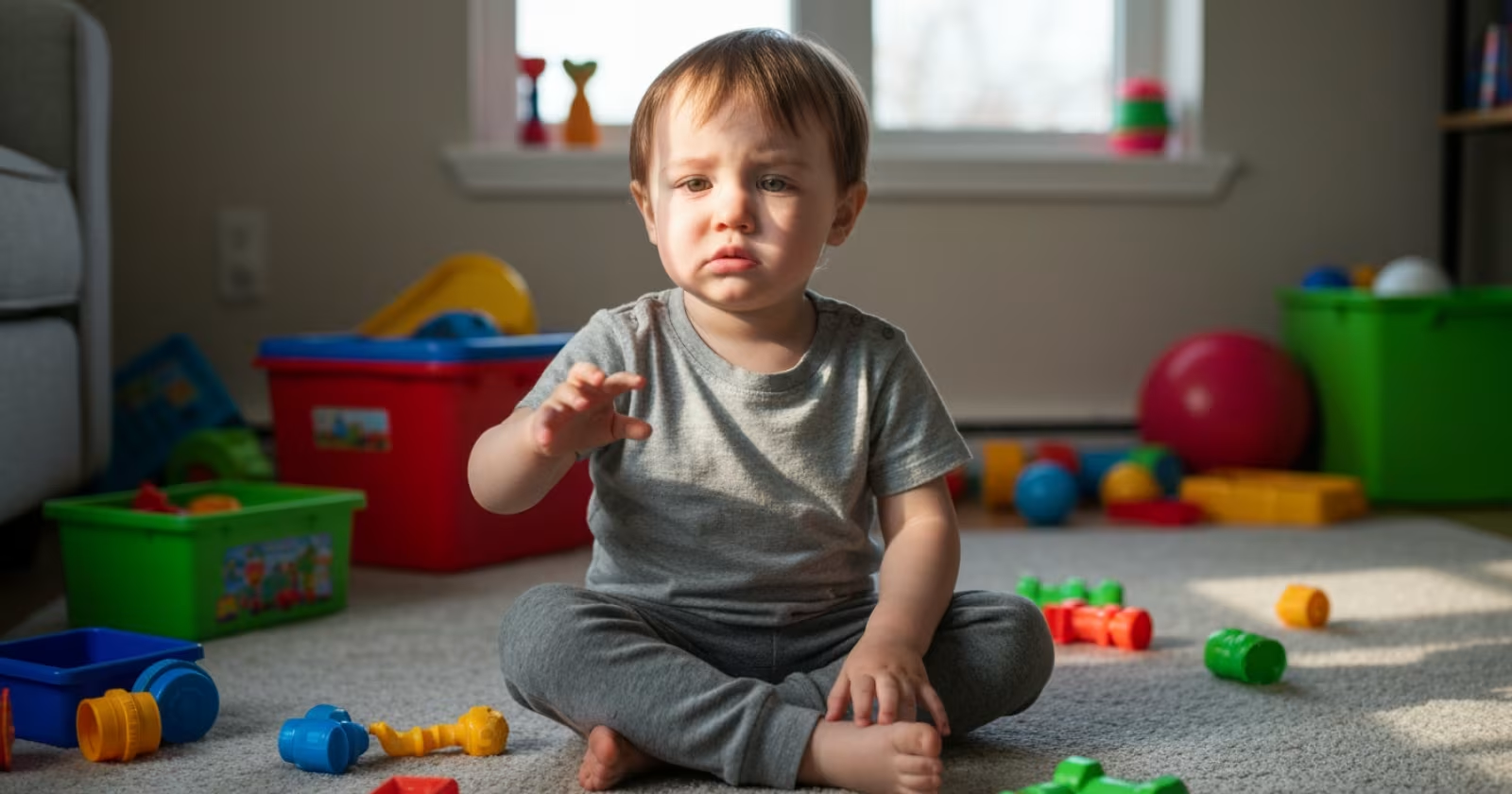
The toy box is overflowing. There are flashing buttons, singing animals, tablets that “teach” the alphabet, and a dozen plastic things with batteries. And yet, your child keeps going back to the empty cardboard box the last toy came in.
You might laugh at that. But your child is actually telling you something really profound. That cardboard box asks something of them — their imagination. Most of those shiny toys in the box? They ask almost nothing at all.
And that difference matters far more than most of us realize.
The Quiet Problem With Toys That Do Too Much
Here is something I wish more parents heard early on. A toy that does everything for a child leaves very little for the child to do. When a toy lights up, sings, moves, and narrates a story all at the push of one button — the child becomes a spectator, not a player.
Think about a toddler holding a toy phone that says the numbers aloud every time a button is pressed. It feels educational. It sounds educational. But the child is mostly just pressing and listening. Now picture that same toddler holding a plain wooden block against their ear, babbling into it, pretending to call grandma. That second child is doing the heavy cognitive lifting — creating language, building a scene, practicing social roles.
The difference is invisible to the eye but enormous inside the brain.
The toys that seem to do the least often demand the most from a child’s mind — and that is exactly what growing brains need.
This does not mean every battery-operated toy is harmful. But when a child’s entire play environment is dominated by toys that entertain rather than engage, something important starts to shrink — their ability to create, problem-solve, and tolerate the beautiful discomfort of figuring things out on their own.
Why Overstimulating Toys Change How Children Play
Children’s brains in the first six years are wiring themselves at an astonishing pace. Every experience shapes those connections. Play is not a break from learning — play is how learning happens. And the kind of play matters deeply.
When a toy provides constant sensory rewards — loud sounds, bright flashes, instant responses — it trains the brain to expect high stimulation for low effort. Over time, this can make simpler, quieter activities feel boring. A child who is used to a tablet toy that rewards every tap may struggle to sit with a set of crayons and a blank page.
This is not a character flaw in the child. It is a predictable response from a brain that has been shaped by a certain kind of input.
- Reduced attention span — Children used to rapid-fire stimulation often find it harder to focus on slower, open-ended tasks
- Less imaginative play — When the toy dictates the story, the child stops inventing their own
- Lower frustration tolerance — Toys that always respond instantly do not teach a child to wait, try again, or problem-solve
- Decreased verbal interaction — Research in developmental psychology shows that electronic toys lead to fewer words spoken between parent and child during playtime
- Dependence on external entertainment — The child loses the ability to generate their own engagement from within
None of this means you have failed if your house is full of these toys. Nearly every home in 2026 has them. The point is not guilt — it is awareness. Once you see the pattern, you can gently shift it.
What Makes a Toy Actually Good for Development
The simplest way I can put it: a good toy is 10% toy and 90% child. It should be simple enough that the child’s brain has to fill in the gaps. Those gaps are where creativity, language, and problem-solving grow.
| Toy Type | What the Child Does | Developmental Value |
|---|---|---|
| Electronic talking toy | Presses buttons, listens | Low — passive engagement |
| Building blocks | Stacks, designs, problem-solves | High — spatial reasoning, creativity |
| Pre-programmed tablet game | Follows instructions on screen | Low to medium — limited creativity |
| Art supplies (crayons, clay) | Creates freely, makes decisions | High — fine motor skills, expression |
| Toy with one function (e.g., dancing robot) | Watches | Very low — child is a spectator |
| Dolls, animal figures, kitchen sets | Invents stories, role-plays | High — emotional and social development |
You will notice a pattern. The toys with the least built-in “entertainment” tend to score highest. That is not a coincidence.
Small Shifts You Can Make Starting Today
Rotate instead of remove. You do not need to throw everything out. Pick three or four open-ended toys — blocks, crayons, a few figures — and put the rest away for a couple of weeks. Watch what happens when the options narrow. Children almost always play more deeply with less.
Join the floor. Sit with your child during play, but resist the urge to direct. Instead of saying “build a tower,” try “I wonder what you will make.” Follow their lead. Let the play be messy and unstructured. Your presence without pressure is one of the most powerful developmental tools that exists.
Let boredom breathe. When your child says “I am bored,” wait. Do not rush to fix it. Boredom is not a problem — it is a doorway. Within minutes, most children will invent something to do. That invention is pure cognitive gold.
Choose toys that can become anything. A set of wooden blocks can be a castle, a road, a spaceship, or a phone. A singing plastic spaceship can only ever be a singing plastic spaceship. When you are buying a new toy, ask yourself: can this be used in ten different ways? If yes, it is probably a wonderful choice.
Bring nature and household items into play. Sticks, stones, pots, spoons, fabric scraps, cardboard — these are not substitutes for “real” toys. For a developing brain, they often are the real toys. Children across generations and cultures have thrived on exactly these kinds of materials.
Watch your child, not the marketing. Toy packaging in 2026 is designed to convince parents, not serve children. Words like “educational,” “brain-boosting,” and “STEM-approved” are often marketing language, not developmental truth. The best judge of whether a toy is working is not the label — it is your child’s face during play. Are they focused? Are they talking? Are they making decisions? Then the toy is doing its job.
A Word About Guilt
If you are reading this and feeling a wave of regret about the toys already in your home — please pause. You bought those toys with love. You chose them because you wanted your child to be happy and to learn. That intention was never wrong.
Parenting is a constant process of learning and adjusting. The fact that you are reading this article right now means you care deeply. That matters more than any toy ever could.
You do not need a perfect playroom. You need a few good materials, some unhurried time, and the willingness to let your child lead. The rest will follow.
Sometimes the best thing a parent can do is not add more — but quietly take a step back, and let a child’s own mind do what it was beautifully built to do.