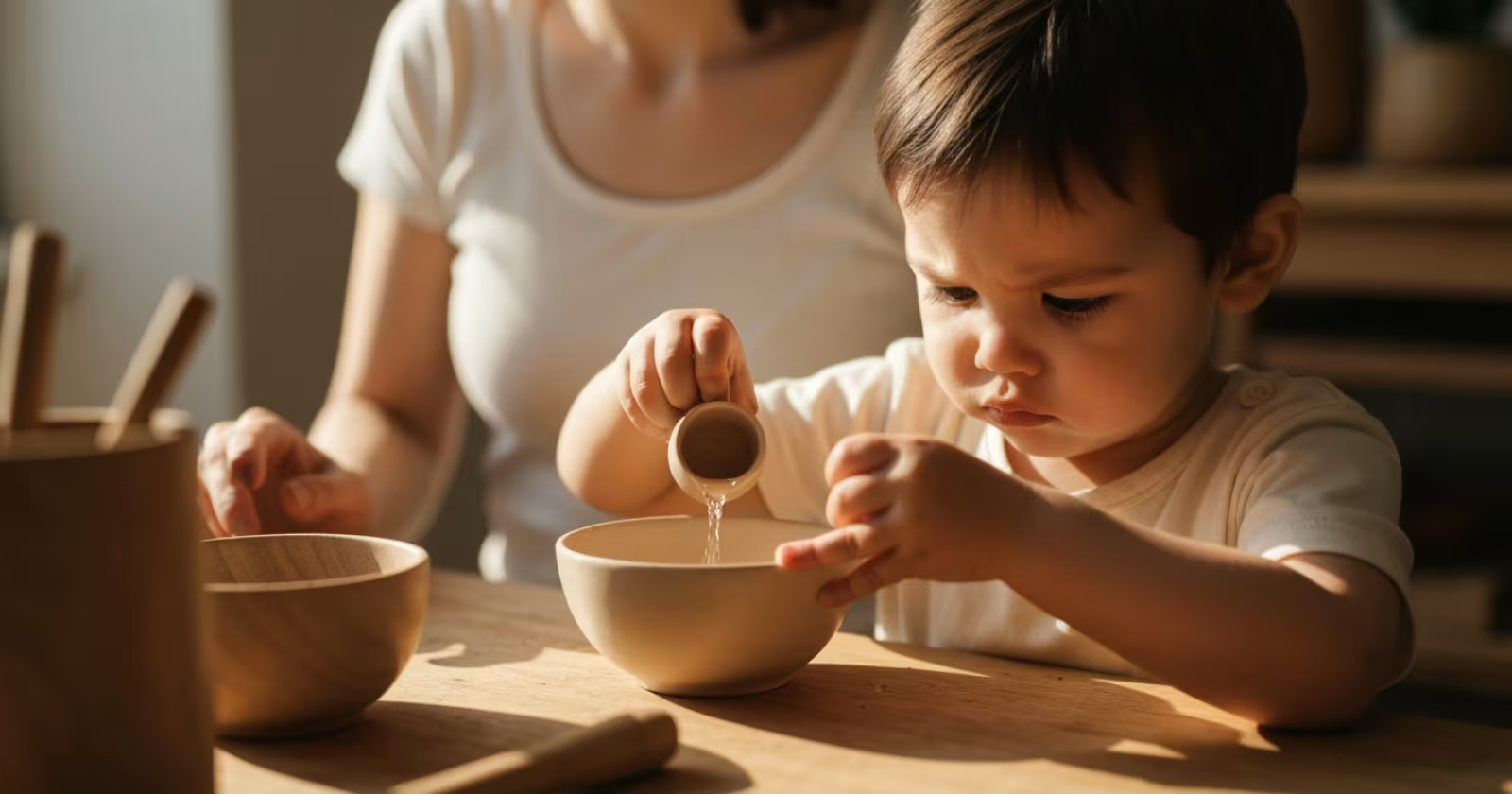
A two-year-old stands at the kitchen counter, slowly pouring water from a small pitcher into a cup. Half of it spills. Her mother watches from a few feet away, hands clasped together, resisting every urge to step in and do it for her.
That moment — that quiet, almost painful restraint — is the heart of something much bigger than spilled water. It is about what a child learns when we let them struggle just enough. And it is about what we accidentally take away when we rush in too fast.
If you have ever wondered why Montessori classrooms look so different from traditional ones — why three-year-olds serve their own snacks and four-year-olds wash their own dishes — the answer lives in this idea. And it goes far deeper than teaching kids to be “helpful.”
The Real Meaning of Independence in a Child’s World
When most of us hear the word “independence,” we think of teenagers or adults. We picture someone who does not need help. But in the Montessori world, independence means something gentler and more specific. It means giving a child the chance to do what they are developmentally ready to do — and trusting them with that chance.
Maria Montessori, the Italian physician who developed this approach over a hundred years ago, noticed something striking. When children were given real tasks — not toy versions, but actual work like cutting fruit, buttoning a shirt, or sweeping a floor — they became deeply focused. They were calmer. They were more confident. They did not need constant praise or entertainment.
Think about a child in your life who insists on putting on their own shoes. They might take five minutes. They might put them on the wrong feet. But watch their face when they finally manage it. That look is not just pride. It is a child discovering: I can affect my own world.
A child who is allowed to do things for themselves is not being left alone — they are being trusted. And trust is one of the deepest forms of love a parent can offer.
This is the foundation of Montessori’s focus on independence. It is not about making kids grow up faster. It is about respecting the growth that is already happening inside them.
What Drives This Need — The Science Behind the Instinct
Children between the ages of one and six are in what Montessori called “sensitive periods.” These are windows of time when a child’s brain is wired to absorb certain skills with remarkable intensity. One of the strongest sensitive periods in early childhood is the drive for independence and order.
This is why your toddler melts down when you break their banana the wrong way. Or why your three-year-old insists on closing the car door themselves. It is not defiance. It is a deep developmental need to master their environment, piece by piece.
Modern neuroscience supports this beautifully. When young children practice real-life tasks independently, they build what researchers call executive function skills — the brain’s ability to plan, focus, remember instructions, and manage impulses. These skills are among the strongest predictors of success in school and life, even more than early reading or math ability.
Here are some signs your child is in this sensitive period for independence:
- They say “me do it” or push your hands away during everyday tasks
- They become upset when you do something they wanted to try themselves
- They repeat the same action over and over — pouring, opening, closing — with deep concentration
- They watch older children or adults doing tasks and try to imitate them
- They show frustration not because the task is hard, but because they were not given the chance to try
When we see these signs and respond by stepping back — not stepping away, but stepping back — we are working with the child’s natural development instead of against it.
How Independence Builds Emotional Strength
There is a piece of this conversation that often gets missed. Independence is not just about physical skills. It shapes how a child feels about themselves at a very deep level.
A child who is always dressed by a parent, always fed, always cleaned up after — even with the best intentions — receives a quiet, unspoken message: you cannot handle this. Over time, that message settles into their sense of self. They become hesitant. They wait to be told what to do. They look for approval before trying.
A child who has been trusted to try — and sometimes fail, and try again — carries a different message inside: I am capable. That belief becomes the foundation for resilience, curiosity, and the courage to face harder things later in life.
| Age Range | Independence Skills Children Can Practice | What It Builds Emotionally |
|---|---|---|
| 1–2 years | Feeding themselves, putting objects back, simple dressing | Sense of agency and body awareness |
| 2–3 years | Pouring, washing hands, choosing clothes, helping set the table | Confidence and decision-making |
| 3–4 years | Buttoning, preparing simple snacks, tidying their space | Self-trust and focus |
| 4–6 years | Packing their bag, folding clothes, caring for plants or pets | Responsibility and empathy |
Practical Ways to Support Independence at Home
You do not need a Montessori school to bring this into your child’s life. Small shifts at home can make a meaningful difference. The key is to look at your child’s day through their eyes and ask: where can I step back just a little?
Set up their environment for success. Put their cups on a low shelf. Keep a small stool near the sink. Hang their coat hooks at their height. When a child can reach what they need, they stop asking for help — not because they do not need you, but because the environment says “you belong here.”
Slow down your mornings by ten minutes. Most of the time we take over tasks because we are in a rush. If you give your child just a few extra minutes to put on their shoes or zip their jacket, you are giving them something far more valuable than being on time.
Offer limited choices instead of open-ended ones. Instead of “what do you want to wear?” try “the blue shirt or the green one?” This gives them real decision-making practice without overwhelming them. Two options are enough for a young child to feel in control.
Let mistakes be part of the process. When they spill while pouring, hand them a cloth instead of wiping it up yourself. When they button their shirt crookedly, let them wear it that way. The lesson is not perfection. The lesson is: I tried, and the world did not fall apart.
Narrate instead of correcting. If your child is struggling with a task, resist the urge to say “not like that.” Instead, try: “I see you are working on getting that lid open. You are turning it. Let me know if you want me to show you a trick.” This keeps their confidence intact while offering gentle support.
Watch for your own discomfort. Sometimes the hardest part of fostering independence is sitting with our own anxiety. We want to protect. We want things done right. Noticing that urge — and choosing to wait anyway — is one of the bravest things a parent can do.
None of this means you should never help your child. Montessori independence is not about abandonment or coldness. It is about offering help only when truly needed, and trusting the child to tell you when that is.
Parenting in this way is slower. It is messier. There will be days when you are late because your four-year-old needed to buckle their own sandal. There will be moments when you wonder if you are doing it right.
But somewhere in those messy, slow mornings, your child is building something invisible and unshakeable — a quiet belief that they are capable of meeting the world on their own terms. And that belief will carry them long after they have outgrown the small pitcher and the low shelf.