It’s 7:45 in the morning and your four-year-old is still in pajamas, crying because the cereal bowl is the wrong color. You haven’t brushed your own teeth yet. The school bag isn’t packed. And somewhere in the back of your mind, a voice whispers — shouldn’t mornings be calmer by now?
They can be. Not perfect. But calmer. And the secret isn’t stricter rules or waking up earlier. It’s a rhythm — a gentle, predictable flow to the day that helps your child feel safe enough to cooperate.
That’s exactly what a Montessori-inspired routine offers. Not a rigid timetable. A living, breathing structure that grows with your child.
Why Routine Feels Like Love to a Young Child
Between the ages of two and six, children are going through what Maria Montessori called “sensitive periods.” These are windows of time when a child’s brain is especially hungry for order, language, movement, and independence. When life feels predictable, children in this age group don’t just behave better — they actually learn better.
Think about a child who knows that after breakfast comes tooth-brushing, then shoes, then the car. She doesn’t need to be told five times. Her body remembers the sequence. She moves through it almost automatically, and that frees up her brain for bigger things — like noticing a butterfly on the way to school.
Now think about a morning with no rhythm. Every transition becomes a negotiation. The child doesn’t know what comes next, so she clings to whatever she’s doing right now. It looks like defiance. But it’s actually anxiety.
A predictable routine doesn’t limit a child’s freedom — it gives her the safety to use that freedom well.
What’s Really Happening in Their Brain
Young children don’t experience time the way adults do. They can’t think ahead to “later” or plan backward from a deadline. Their brains are still building something called executive function — the ability to plan, prioritize, and shift between tasks. This skill doesn’t fully mature until the mid-twenties.
So when we say “hurry up, we’re getting late,” a three-year-old genuinely doesn’t understand why that matters. But when we show her the same sequence of events every day, her brain starts to build its own internal clock. She begins to anticipate what’s next — and that anticipation is the foundation of self-regulation.
Here are some signs your child might be craving more routine:
- Frequent meltdowns during transitions — leaving the park, stopping play, getting dressed
- Asking the same questions over and over — “What are we doing now? And after that?”
- Resisting bedtime or mealtimes, especially when they happen at different times each day
- Becoming extra clingy or anxious in new environments
- Struggling to do things independently that they’ve done before
These aren’t signs of a “difficult” child. They’re signs of a child whose brain is asking for structure it can rely on.
A Montessori-Inspired Daily Rhythm for Ages 2 to 6
I want to share a flexible framework here — not a minute-by-minute schedule. Every family is different. The goal is rhythm, not rigidity. Adapt the timing to your life, but try to keep the sequence consistent.
| Time Block | Activity | Montessori Principle |
|---|---|---|
| Morning (wake up) | Self-care: toilet, washing face, getting dressed independently | Practical life skills |
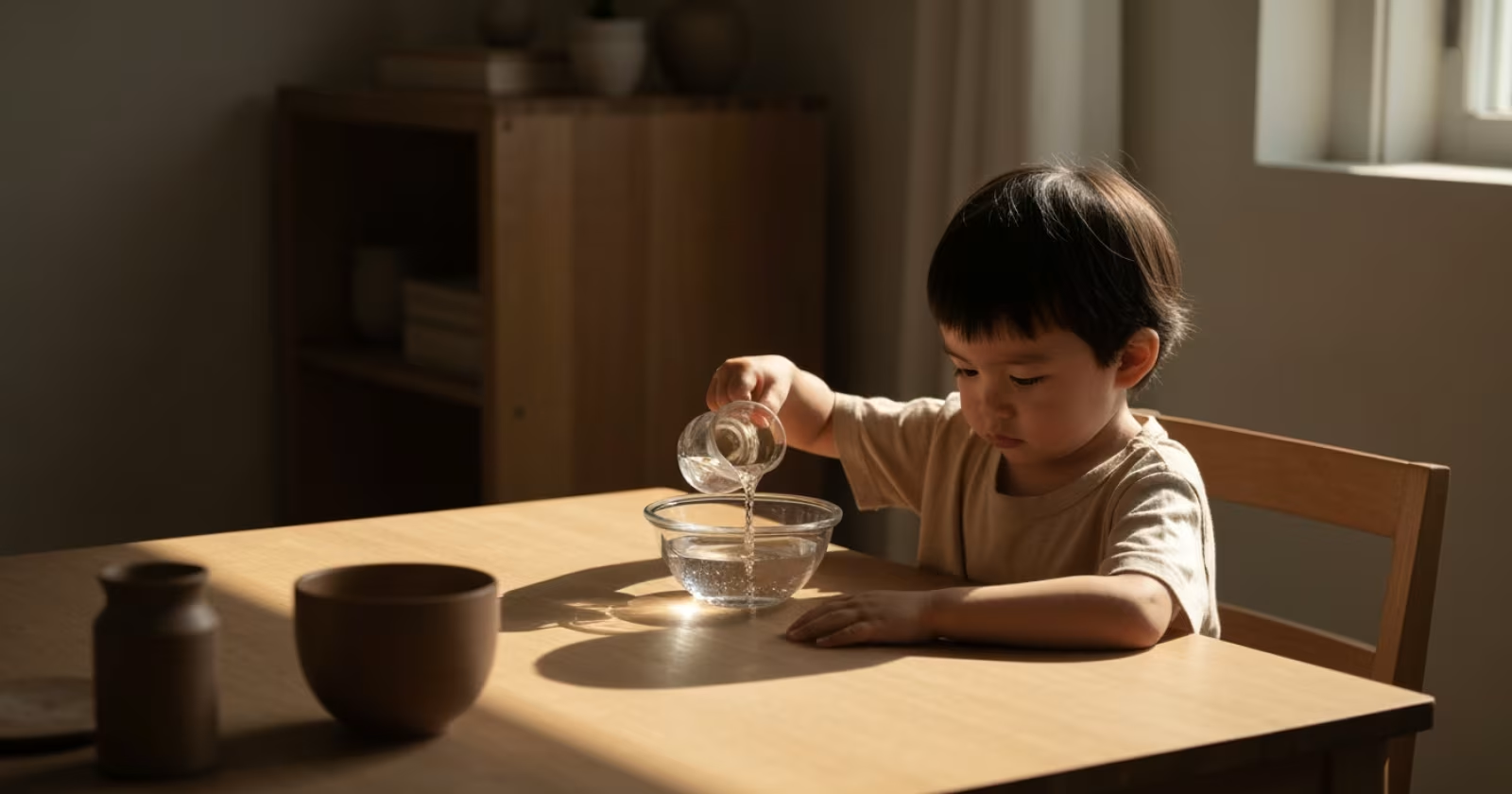
| Breakfast | Child helps set table, pours water, serves self where possible | Independence and order |
| Morning work cycle (1–2 hours) | Focused activity: puzzles, drawing, sensory play, pouring, sorting | Uninterrupted concentration |
| Outdoor time | Free play, nature walk, gardening, gross motor movement | Movement and exploration |
| Lunch | Child helps with preparation and cleanup | Practical life and responsibility |
| Quiet time / Nap | Rest, looking at books, gentle music | Self-regulation and rest |
| Afternoon | Creative play, art, pretend play, light household tasks | Imagination and contribution |
| Evening wind-down | Bath, story time, conversation about the day | Connection and language |
| Bedtime | Consistent routine: book, song, lights out at the same time | Order and security |
Notice how many of these involve the child doing things — not being entertained. That’s the heart of Montessori. Children this age desperately want to participate in real life. Letting them pour their own water, wipe a table, or fold a small towel isn’t extra work for you. Over time, it actually becomes less work.
How to Build This Routine Without Losing Your Mind
Start with just one part of the day. Don’t try to overhaul everything at once. Pick the most stressful transition — usually mornings or bedtime — and create a predictable sequence for that one block. Once it feels natural, add another.
Use visual cues instead of verbal reminders. A simple picture chart on the wall showing the morning steps — wake up, toilet, brush teeth, get dressed, eat — gives your child something to follow without you repeating yourself. Even a two-year-old can follow pictures.
Prepare the environment, not the child. If you want your child to dress independently, keep clothes in a low drawer she can reach. If you want her to help at mealtimes, put child-sized plates where she can access them. Montessori is less about teaching and more about removing obstacles.
Protect the morning work cycle. This is the golden window — usually between 9 and 11 a.m. — when young children are most focused. Try to keep this time free of errands, screens, and interruptions. Set out two or three activities and let your child choose. Resist the urge to direct or correct. Just be nearby.
Build connection into the routine, not just tasks. A two-minute conversation at dinner about “the best part of your day” matters more than a perfect schedule. Routines work because they create pockets of predictability — and those pockets are where real connection happens.
Expect resistance at first. If your child has been living without much structure, she might push back for the first week or two. That’s normal. Stay calm and consistent. Her brain is adjusting. The meltdowns usually decrease noticeably by week three.
What About Weekends and Holidays?
You don’t need to follow the same schedule on weekends. But keeping the sequence similar helps enormously. Wake up, self-care, breakfast, some activity, outdoor time, rest — the order stays the same even if the timing shifts. Children feel anchored by sequence more than by clock time.
During holidays or travel, carry a few elements of the routine with you. The same bedtime book. The same morning song. These small anchors can prevent the emotional unraveling that often happens when everything feels unfamiliar.
There will be days when the routine falls apart completely. The baby is sick. You overslept. Life happened. On those days, let it go without guilt. One chaotic day doesn’t undo weeks of consistency. Your child’s brain remembers the pattern. You can pick it back up tomorrow.
Building a routine for your young child isn’t about control. It’s about giving her a world she can understand and move through with confidence. And in that confidence, you’ll find something unexpected — a little more peace for yourself, too.
The days are long, and some of them are truly exhausting. But a child who knows what comes next is a child who can breathe a little easier — and so can you.