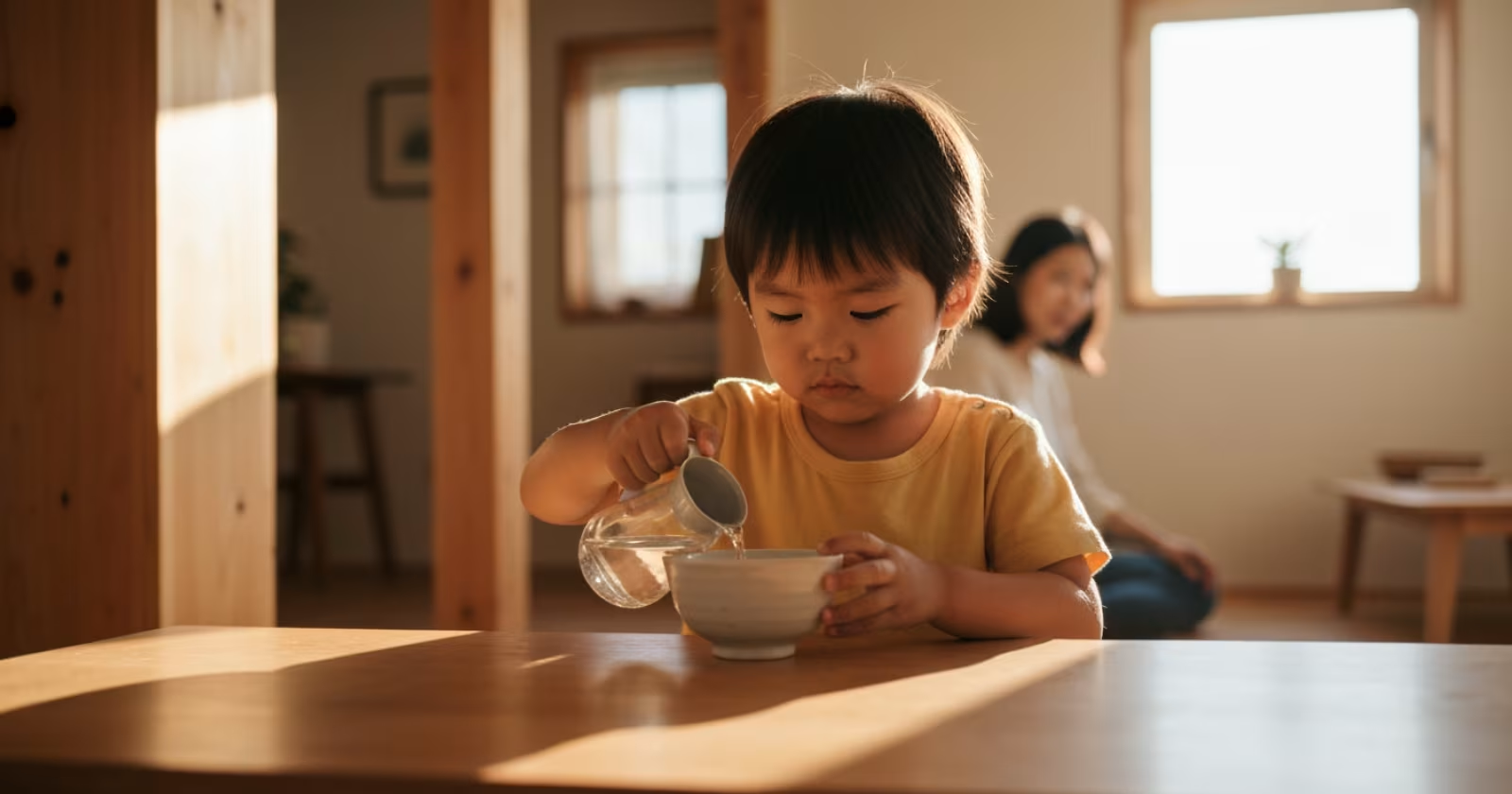
Your toddler walks into the kitchen, pulls open a heavy drawer, and struggles to reach a cup. You rush over, hand it to them, and move on. But something in their face tells you they didn’t want the cup handed to them. They wanted to get it themselves.
That tiny moment — the reaching, the trying, the wanting to do it alone — is exactly what the Montessori approach builds an entire philosophy around. And at the heart of that philosophy sits one beautifully simple idea: the prepared environment.
It sounds formal. Almost clinical. But once you understand what it really means, you’ll see it’s one of the most loving things you can do for your child.
A Space That Speaks to the Child, Not the Adult
When Maria Montessori first developed her approach over a hundred years ago, she noticed something striking. Children didn’t need adults to constantly direct them. What they needed was a space designed so thoughtfully that it invited them to explore, choose, and learn — on their own terms.
A prepared environment is exactly that. It’s a physical space — a classroom or a room at home — arranged intentionally so that everything a child needs is within reach, organized, and appropriate for their age. Low shelves instead of tall cabinets. Child-sized furniture. Materials placed neatly so the child can pick them up, use them, and put them back without asking for help.
But it goes deeper than furniture height. A prepared environment also means emotional safety. It means the child feels calm when they walk into the space. There’s order, but not rigidity. There’s freedom, but not chaos.
A prepared environment doesn’t control the child — it trusts the child enough to let them lead.
Think of a child who walks into a cluttered room filled with dozens of toys stuffed in bins. Compare that to a child who enters a room with five carefully chosen activities laid out on a clean shelf. The second child doesn’t feel overwhelmed. They feel invited. That difference matters more than most of us realize.
Why Children Thrive When the Space Is Ready for Them
Children between the ages of one and six go through what Montessori called “sensitive periods.” These are windows of time when a child is naturally drawn to learning specific skills — language, movement, order, small details. A prepared environment is designed to meet these sensitive periods exactly where the child is.
When the environment matches the child’s developmental stage, something powerful happens. The child doesn’t need to be told what to do. They gravitate toward activities that their brain is already hungry for. A two-year-old reaches for pouring exercises because their hands are ready. A four-year-old traces sandpaper letters because their mind is craving language patterns.
Here’s why this approach works so well:
- Children develop independence when they can access materials without adult help.
- Order in the environment helps build order in the child’s thinking.
- Limited choices reduce overwhelm and increase focus.
- Real-life materials — like glass cups and wooden tools — teach responsibility through trust.
- Beauty and simplicity in the space encourage respect and calm behavior.
This isn’t about creating a perfect Pinterest room. It’s about removing obstacles between the child and their natural desire to learn. When you take away the barriers — things too high, too many, too complicated — the child steps forward on their own.
The Six Elements That Make a Prepared Environment Work
If you want to bring this idea into your home, it helps to understand what actually makes a prepared environment “prepared.” There are six core elements Montessori identified, and each one plays a role.
| Element | What It Means | Simple Home Example |
|---|---|---|
| Freedom | The child chooses what to work on | Offering 3–4 activity options on a low shelf |
| Structure and Order | Everything has a place | Labeled baskets, consistent layout |
| Reality and Nature | Real materials, not plastic imitations | A small glass pitcher for pouring water |
| Beauty and Simplicity | A clean, inviting, uncluttered space | A small plant, neutral colors, open floor space |
| Child-Sized Tools | Furniture and materials fit the child’s body | A low table, a step stool in the kitchen |
| Community Atmosphere | Mixed ages learning together | Siblings working side by side on different tasks |
You don’t need to buy an entire Montessori shelf system. You need intention. A small corner of a room can become a prepared environment if the materials are chosen with care, placed at the child’s height, and rotated every few weeks to match their growing interests.
How to Create a Prepared Environment at Home
Start by getting down to your child’s eye level. Literally. Sit on the floor in their room or play area and look around. What can they reach? What’s cluttered? What’s overwhelming? This one exercise changes everything.
Next, reduce. I know this feels counterintuitive, especially when you’ve bought toys and books with so much love. But children focus better with fewer options. Choose four to six activities and put the rest away. Rotate them every week or two.
Use real materials when possible. A small broom they can actually sweep with. A wooden knife and a banana they can slice. A cloth napkin they can fold. These practical life activities build coordination, confidence, and a sense of belonging in the family. Your child doesn’t just play in the house — they participate in it.
Create a sense of order that the child can maintain. If every item has a clear spot — a tray, a basket, a specific place on the shelf — the child learns to put things back. Not because you nag, but because the environment itself gently teaches them.
Make the space beautiful in simple ways. A small vase with a flower. A framed picture at the child’s eye level. Soft natural light. Children respond to beauty just like adults do. It calms them. It tells them: this space matters, and so do you.
Finally, step back. This might be the hardest part. A prepared environment works best when the adult becomes a gentle guide, not a director. Watch your child. Notice what draws them. Resist the urge to correct or redirect unless safety is involved. Their choices are telling you exactly what they need to learn right now.
What a Prepared Environment Really Gives Your Child
When I think about what this approach offers, it’s not really about academics or getting ahead. It’s about something quieter and more lasting. A child who grows up in a prepared environment learns to trust themselves. They learn that their choices matter. They learn that the world can be orderly and kind.
They also learn something many adults still struggle with — how to focus. In a world that pulls attention in a hundred directions, a calm and intentional space teaches a child how to settle into one thing deeply. That skill doesn’t just help in school. It helps in life.
Not every day will look perfect. Some days the shelf gets ignored and the crayons end up on the wall. That’s okay. The prepared environment isn’t about perfection. It’s about a consistent, quiet message your child receives every time they walk into their space: I trust you. I see what you need. And I’ve made room for you to grow.
Sometimes the most powerful thing we can do as parents isn’t to teach more — it’s to prepare the ground and let our children find their own way forward.