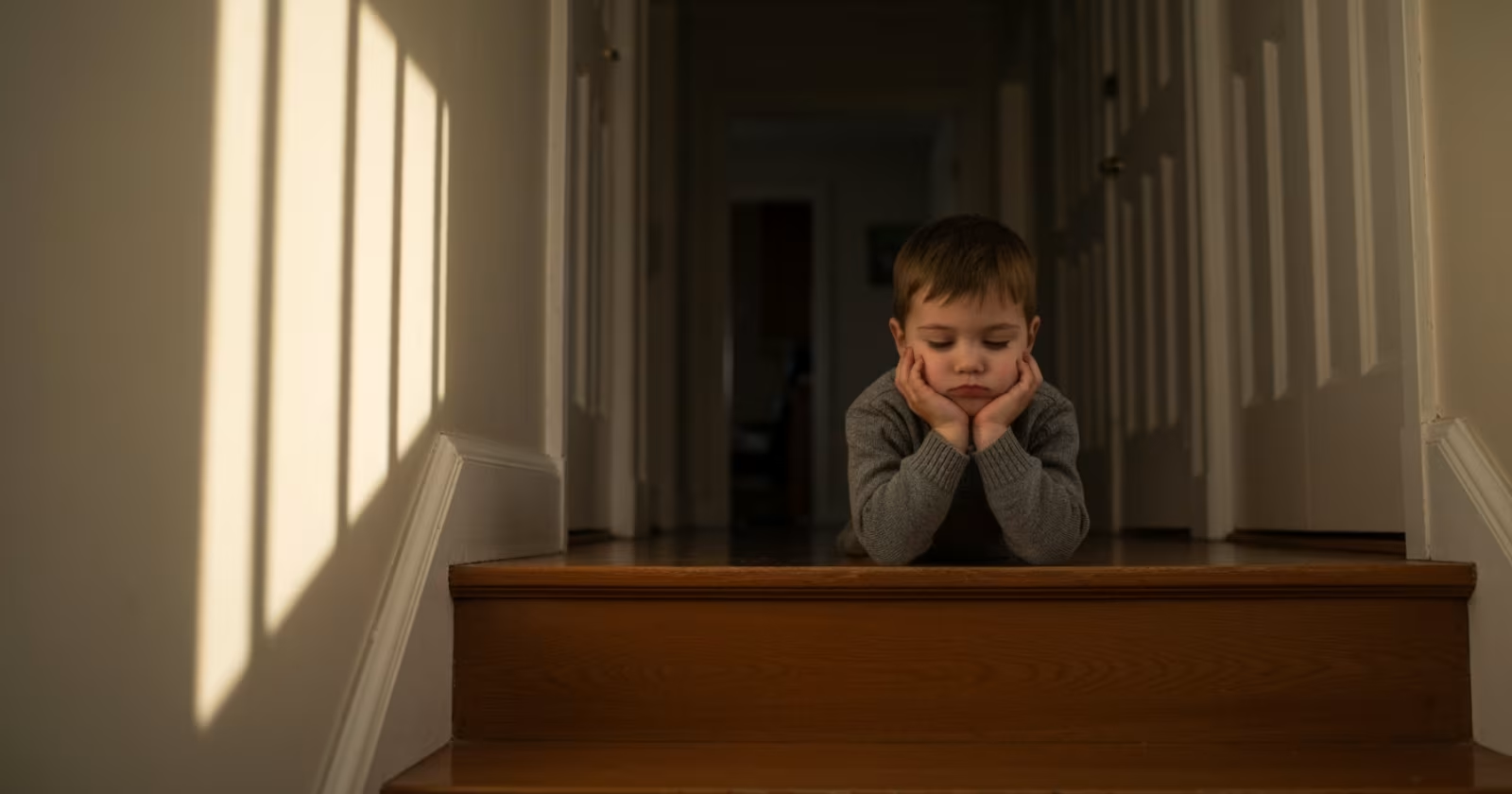
You’ve just told your nine-year-old that their best friend’s birthday party is cancelled. Or that they didn’t make the school team. Or that screen time is over for the day. And they shrug, look away, and mutter three words that somehow sting more than a tantrum: “I don’t care.”
Something about that phrase lands differently than yelling or crying. It feels like a door shutting. It can make you feel helpless, frustrated, even a little hurt. You want to say, “But you DO care.” And the truth is — you’d be right.
Those three words are almost never what they seem. And once you understand what’s actually happening behind them, everything about how you respond can change.
The Shield They Didn’t Know They Were Holding
When a child says “I don’t care,” what they’re almost always really saying is: “I care so much that it hurts, and I don’t know what to do with this feeling.” It’s not apathy. It’s armor.
Think about the last time you felt deeply disappointed about something at work, or in a relationship. There’s a good chance your first instinct wasn’t to cry or talk about it. It was to brush it off. To act like it didn’t matter. Children do the same thing — they just don’t have the self-awareness yet to recognize it as a coping strategy.
A child who didn’t get picked for the school play might come home and say, “I don’t care about that stupid play anyway.” But later that night, they’re unusually quiet. They don’t eat much. They pick a fight with their sibling over nothing. The feeling didn’t disappear. It just went underground.
“I don’t care” is rarely a statement of truth. It’s a child’s way of saying the feeling is too big to hold right now.
This is what psychologists call a defense mechanism — a way the mind protects itself from emotional pain. In adults, we recognize it more easily. In children, we often mistake it for rudeness, defiance, or laziness. And that misread can push them further into silence.
Why Children Choose These Words
There are real developmental reasons why “I don’t care” becomes a go-to phrase, especially between ages six and thirteen. Understanding them doesn’t excuse difficult behavior, but it does help us respond more wisely.
- Their emotional vocabulary is still small. A child might feel embarrassed, disappointed, jealous, and anxious all at once — but they don’t have words for that cocktail of feelings. “I don’t care” becomes a catch-all phrase for “I feel something I can’t name.”
- They’re protecting themselves from vulnerability. Admitting you care means admitting you could be hurt. For a child who has been teased, dismissed, or who simply watches how adults handle emotions, shutting down can feel safer than opening up.
- They feel powerless. When a child has no control over a situation — a family move, a divorce, a rule they disagree with — saying “I don’t care” is sometimes the only power they feel they have. It’s a way of saying, “You can’t hurt me if I don’t let this matter.”
- They’ve learned it from watching us. If we tend to minimize our own feelings — “It’s fine, I’m fine, it doesn’t matter” — children absorb that pattern. They learn that the acceptable response to pain is to pretend it doesn’t exist.
- They’re testing whether you’ll stay. Sometimes “I don’t care” is a quiet test. Will you walk away? Will you get angry? Or will you stay calm and show them that their feelings are safe with you?
| What They Say | What They Might Mean |
|---|---|
| “I don’t care about the test.” | “I’m scared I’ll fail and everyone will judge me.” |
| “I don’t care if she’s not my friend anymore.” | “I’m really hurt and I don’t know how to fix it.” |
| “I don’t care about your rules.” | “I feel like I have no say in my own life.” |
| “I don’t care what happens.” | “I feel overwhelmed and I’ve given up trying.” |
| “Whatever. I don’t care.” | “Please notice that I’m not okay.” |
How to Respond Without Pushing Them Away
The instinct to correct them — “Of course you care” — is understandable. But it usually backfires. It tells the child that you’re not hearing what they’re actually communicating. Here are responses that work better.
Resist the urge to argue with the phrase. Don’t say, “Yes you do care” or “Stop saying that.” Instead, try something softer: “Okay. That’s fine if you don’t. But I’m here if that changes.” This removes the pressure and keeps the door open. Many children will circle back to the feeling hours later — sometimes at bedtime — when they feel safe enough.
Name what you see, not what they said. You might say, “You seem a little quiet since we talked about the party.” You’re not challenging their words. You’re reflecting what you notice. This is a technique called emotional mirroring, and it helps children feel seen without feeling cornered.
Share a time you felt the same way. Not as a lecture, but as a bridge. “When I was about your age, I pretended I didn’t care about something that actually really mattered to me. It felt easier at the time.” You’re normalizing the feeling without forcing them to admit anything.
Give them space — but stay close. Some children need twenty minutes. Some need a whole day. Don’t hover, but don’t disappear either. Sit in the same room. Do something quiet nearby. Let your presence communicate: “I’m not going anywhere, and there’s no rush.”
Watch for the real conversation that comes later. It rarely happens in the moment of conflict. It might happen during a car ride, while cooking together, or right before sleep. These sideways moments — when there’s no eye contact and no pressure — are when children tend to let the truth slip out. Be ready for it.
Check if it’s becoming a pattern. An occasional “I don’t care” is normal. But if your child is consistently shutting down, withdrawing from things they once enjoyed, or using this phrase across many areas of life, it may signal something deeper — anxiety, low self-worth, or emotional exhaustion. In that case, a conversation with a school counselor or child therapist can help.
The Feeling Behind the Phrase
One thing I’ve learned from talking to hundreds of parents is this: the moments when our children seem most indifferent are often the moments when they feel the most. The shrug is not emptiness. It’s a full heart that doesn’t know how to open.
Our job isn’t to pry it open. It’s to make the environment safe enough that they eventually open it on their own. That means tolerating the discomfort of hearing “I don’t care” without taking it personally or trying to fix it immediately.
Some of the most meaningful parenting happens not when we have the perfect response, but when we simply stay. When we don’t walk away frustrated. When we don’t lecture. When we sit with the silence and trust that our child will find their way back to honesty — because we made it safe to do so.
The child who says “I don’t care” is almost always the child who cares the most and needs you to know it without having to say it out loud.